



THE CIA AND THE VATICAN IN MOSCOW.
THE POSEIDON CARRIER — RUSSIA’S ULTIMATE WEAPON — ENTERS SEA TRIALS.
BREAKING NEWS: Russian Foreign Ministry spokeswoman Maria Zakharova said Russia could strike British military installations and assets “in Ukraine and beyond its borders” in retaliation for Ukrainian attacks using British-supplied long-range missiles.
What is happening?
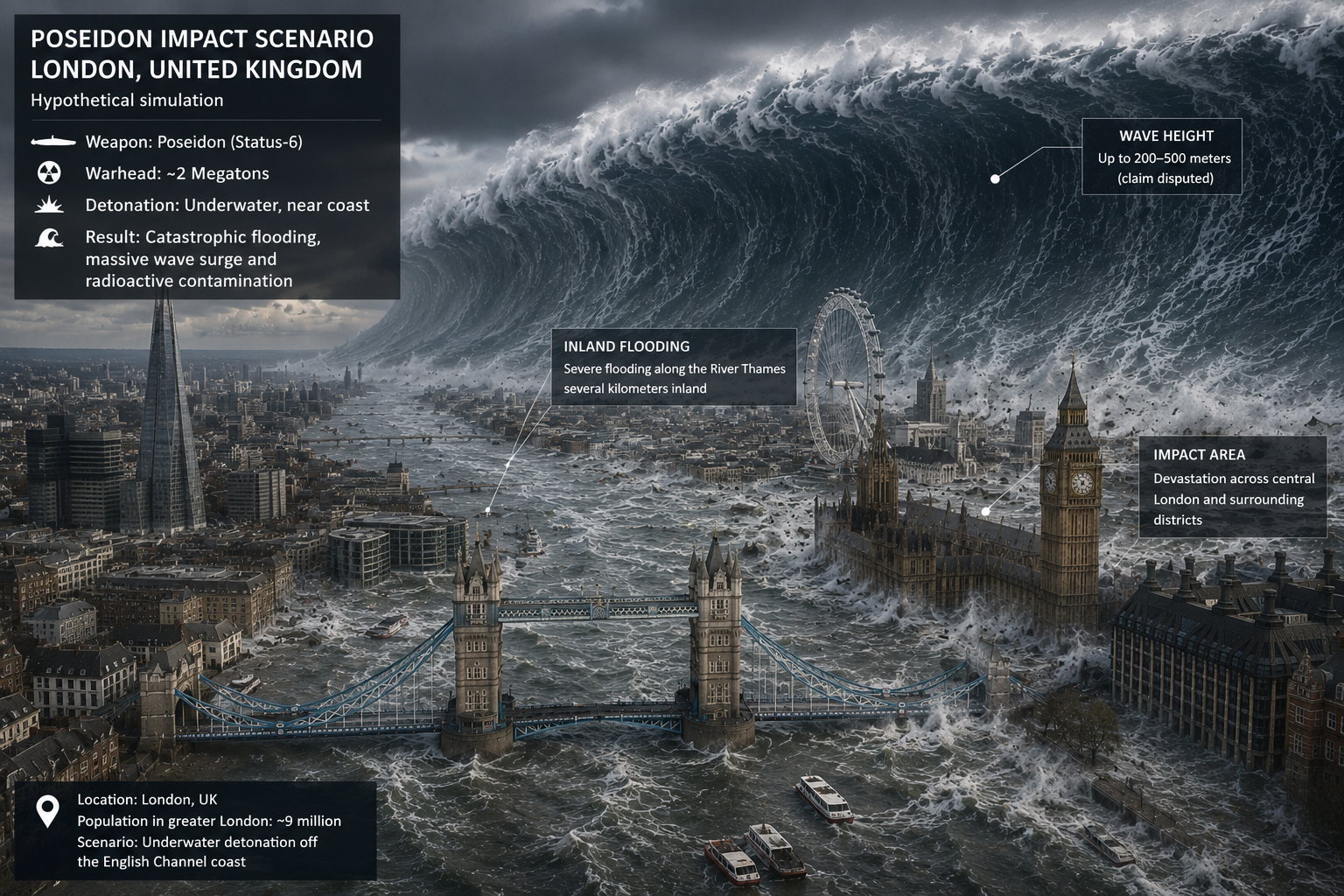
A series of seemingly unrelated events is unfolding almost simultaneously. One concerns diplomacy. Another, nuclear deterrence.
Taken together, they offer a glimpse into the deterioration of relations between Russia and the United Kingdom — and the growing risk of a new escalation.
LONDON
Andrey Kelin is no longer Russia’s ambassador to the United Kingdom: he concluded his mission on July 21, after more than seven years in London.
At first glance, this might look like a routine diplomatic rotation, but the politically significant detail is something else: Moscow has yet to name a successor, and the embassy is currently headed by Chargé d’Affaires Vasily Tsyganov — a lower level of diplomatic representation than an ambassador.
The Russian Embassy denies that this amounts to a formal downgrading of diplomatic relations. At the same time, however, it describes relations between Russia and the United Kingdom as having deteriorated to an “unprecedented” level.
The distinction matters. This kind of communication between the lines is the language of geopolitics: The message lies not necessarily in what is said, but in what is done.
We are not witnessing a formal rupture in diplomatic relations, but we are clearly seeing those relations hollow out — raising questions about what more serious developments may lie ahead.
WHY LONDON?
The United Kingdom has become one of Ukraine’s most determined military backers. The British government has committed roughly £3 billion a year in military assistance through the end of the decade and continues to provide Kyiv with weapons systems, training and technological capabilities, pushing the relationship into increasingly dangerous territory — one that is beginning to territory that could give Moscow grounds to consider preventive action.
Tensions rose further after Russian security services obtained confirmation that British-supplied drones provided to Ukraine had been used against targets inside Russia.
The response from the Russian Embassy was unequivocal: British actions would have consequences.
This is not an isolated episode. In April, London summoned the Russian ambassador after Moscow expelled another British diplomat, and the United Kingdom responded by revoking the accreditation of a Russian diplomat. The Foreign Office warned that any further Russian moves would be regarded as an escalation.
Relations between Moscow and London has therefore entered a phase in which diplomacy formally continues to exist, but its political space is steadily narrowing, leaving progressively less room for diplomatic mediation and public rhetoric.
And this is where Poseidon enters the picture.
THE ULTIMATE WEAPON
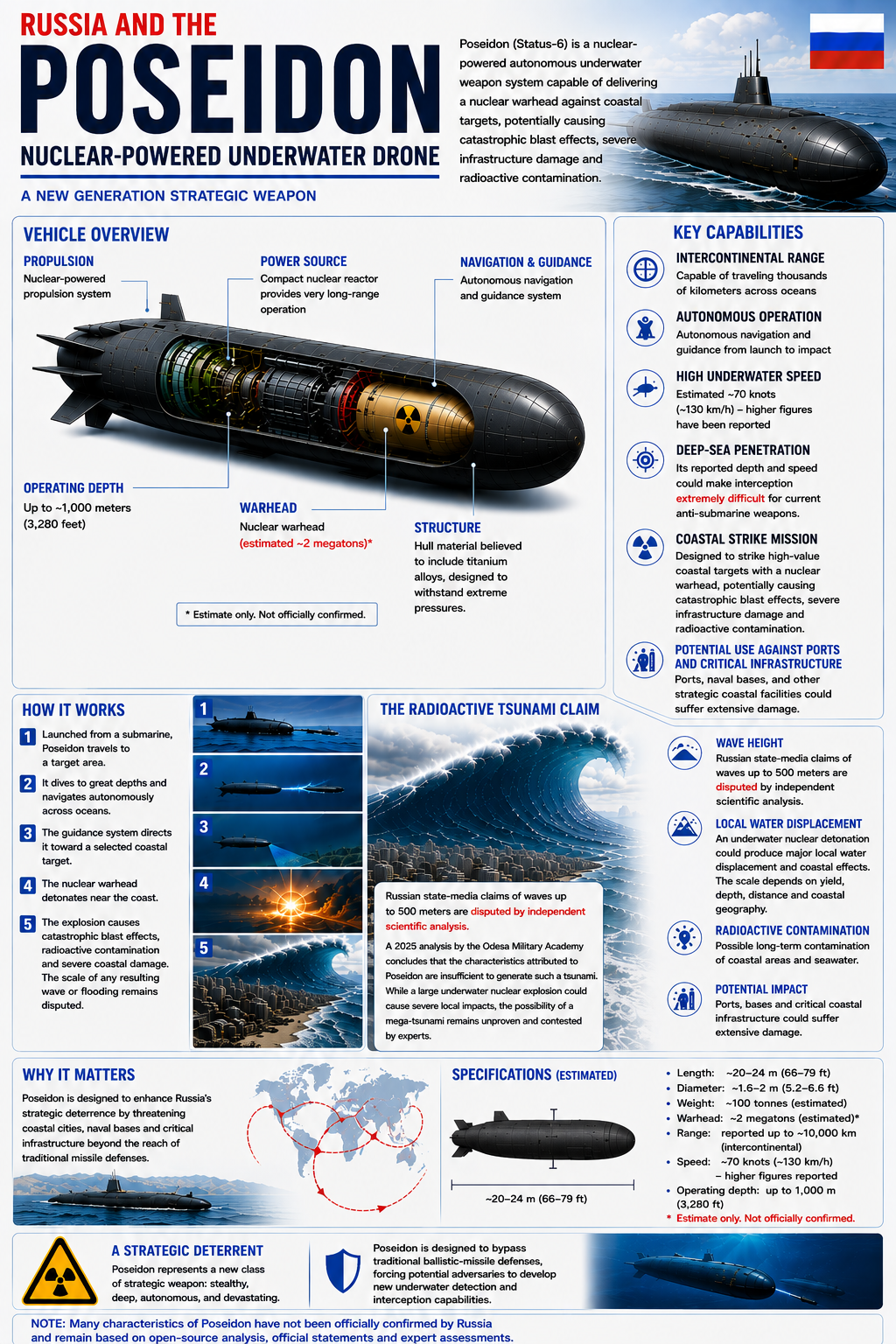
At almost exactly the same time that the diplomatic vacuum was developing in London, a far more disturbing report emerged from the White Sea: Russia’s new nuclear-powered submarine, the Khabarovsk, had begun sea trials.
This is no ordinary submarine.
It was designed specifically as a carrier for the strategic Poseidon system — a weapon feared by the United States because of its ability to approach an adversary’s coastline at high speed and with a very low acoustic signature, potentially devastating vast coastal areas through enormous radioactive tsunami waves.
Some reports have spoken of waves reaching heights of up to 500 meters. Those claims remain unconfirmed and are disputed even by Russian experts, although some still acknowledge the potential for the weapon to generate extremely large waves.
Poseidon itself is an enormous autonomous underwater nuclear-powered vehicle and designed to carry a nuclear warhead that, according to Kremlin claims, could reach a yield of 100 megatons.
Moscow has conceived it as an ultra-long-range strategic weapon capable of traveling underwater and striking coastal targets while bypassing much of the traditional architecture of missile defense.
The system was publicly unveiled by Vladimir Putin in 2018 as part of a new generation of Russian strategic weapons.
But the program has moved well beyond the presentation stage.
On July 26, Putin said Poseidon had entered the final stage of preparation and that the next step would be to complete its development and bring it into operational service. The Khabarovsk represents an essential part of that process.
According to a technical analysis by Naval News, the submarine was designed essentially around the Poseidon mission and could carry approximately six of the weapons, although many technical details remain classified and several publicly reported specifications cannot be independently verified.
THE RADIOACTIVE WAVE
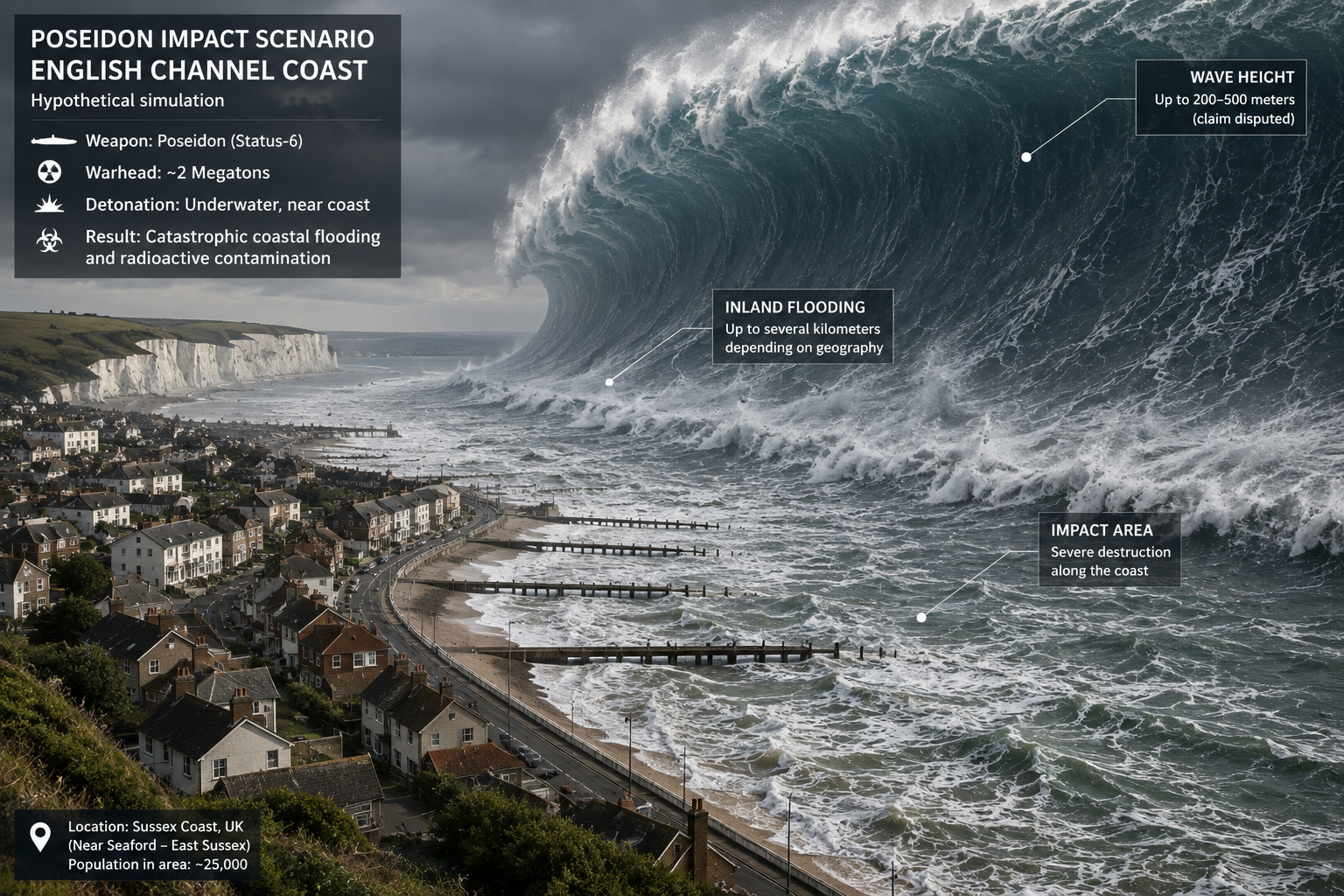
Naval News explicitly notes that much of the coverage surrounding Poseidon has been exaggerated.
Yet no one outside those who have actually tested the weapon knows its true destructive potential.
What is certain is that it is capable of causing extraordinary damage. And if the immense force generated by a nuclear warhead violently displaces the sea toward a seabed that rises sharply near the coast, the result can be a massive tsunami — produced by the same broad physical principle that contributes to the formation and amplification of major ocean waves near shore.
WHY POSEIDON CHANGES THE STRATEGIC BOARD
An intercontinental ballistic missile travels through the atmosphere and can be tracked by early-warning systems. Poseidon introduces an entirely different geometry: it comes from the sea.
That is the strategic shift that concerns Pentagon analysts.
Poseidon does not render Western nuclear forces obsolete. Nor does it suddenly make Russia invulnerable but it provides Moscow with another silent avenue through which it can guarantee its nuclear retaliatory capability.
The logic is that of second-strike capability: even if an adversary were able to destroy a significant portion of Russia’s nuclear forces, Moscow would still retain weapons capable of inflicting catastrophic damage.
It is deterrence through the certainty of retaliation.
A MESSAGE TO BRITAIN
This is where the timing becomes politically significant.
As the Khabarovsk began its trials, Russian state television host Vladimir Solovyov explicitly invoked Poseidon against the United Kingdom, saying, in essence, that the British should be given three days before the weapon was used against them.
A critical distinction is necessary here: Solovyov is not Putin, and his statements do not constitute an official nuclear threat from the Kremlin. He frequently issues inflammatory threats, and the Kremlin rarely goes out of its way to walk them back.
But simply dismissing his words would be naïve.
For years, Russian state television has been one of the arenas in which the most aggressive versions of Russia’s strategic narrative are expressed publicly.
Taken together, these developments point to a change of enormous significance: the progressive normalization of nuclear language within a diplomatic relationship that is simultaneously deteriorating.
THE CIA DIRECTOR MAKES AN UNANNOUNCED TRIP TO MOSCOW
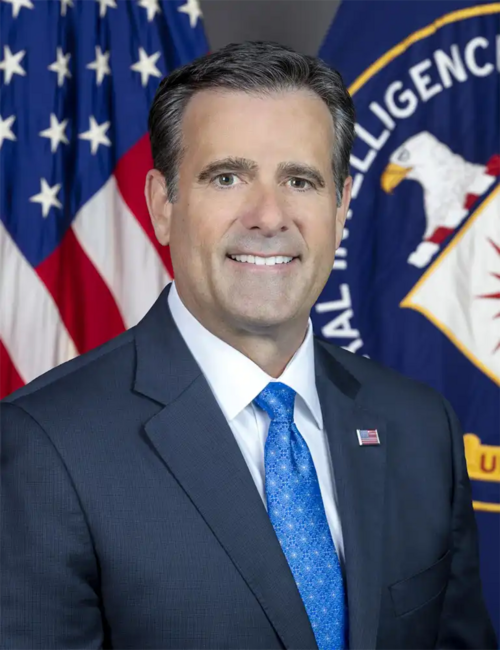
Another development makes the moment even more sensitive: on August 25, 2026, as strategic tensions between Russia and the West continued to rise, CIA Director John Ratcliffe arrived in Moscow on an unannounced visit. The trip had not been made public.
Ratcliffe arrived at Moscow’s Vnukovo Airport aboard a U.S. Air Force C-17A Globemaster III that had flown in from Riga after departing from the Washington area.
Soon afterward, a convoy carrying U.S. diplomatic plates was also observed in Moscow.
That evening, the same C-17 departed the Russian capital.
The most important detail is what we still do not know.
Neither the CIA nor the White House publicly disclosed Ratcliffe’s agenda or the identity of his interlocutors.
The Kremlin said no meetings with representatives of the U.S. administration had been scheduled and that Vladimir Putin had no plans to meet Ratcliffe.
Washington had, however, asked Ukraine temporarily to refrain from attacks in the Moscow area while the American delegation was present.
THE VATICAN’S TOP DIPLOMAT ALSO MAKES AN UNANNOUNCED TRIP TO MOSCOW
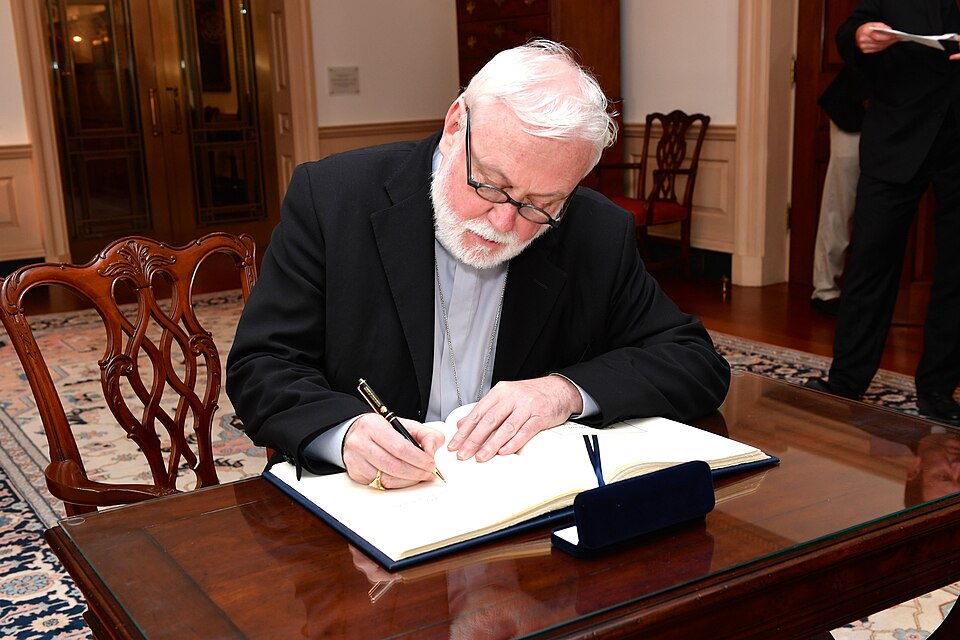
At almost exactly the same time, another high-level figure was present in the Russian capital: Archbishop Paul Richard Gallagher, the Holy See’s chief diplomat.
Gallagher arrived on August 24 for a mission scheduled to last through August 28.
On August 25, he met Russian Foreign Minister Sergey Lavrov. On August 26, he met Yuri Ushakov, Putin’s foreign-policy adviser, in addition to holding other meetings involving the Moscow Patriarchate.
With Lavrov, Gallagher explicitly discussed possible paths toward peace in Ukraine, stating — according to Vatican sources — that the war must end urgently.
Lavrov expressed satisfaction with Vatican efforts to create a diplomatic path forward, precisely because negotiations with Europe are viewed as impossible, while dialogue with the United States and the Catholic Church remains possible.
The timing becomes even more striking when viewed against the last known visit to Moscow by a CIA director: that visit took place in November 2021.
William Burns was sent by the Biden administration while U.S. intelligence was watching Russian forces mass around Ukraine.
Burns carried Washington’s warning directly to Moscow about the consequences of an invasion.
Three months later, on February 24, 2022, Russia launched its full-scale invasion of Ukraine.
AN EVEN MORE REMARKABLE COINCIDENCE
It is also worth noting that Gallagher’s previous visit to Moscow had taken place in November 2021, when he met Lavrov and other senior Russian officials.
Now, nearly five years later, the head of the CIA and the Vatican’s top foreign-policy official have returned to Moscow at almost exactly the same time, while the war in Ukraine continues and the strategic confrontation between Russia and the West enters an extremely delicate phase.
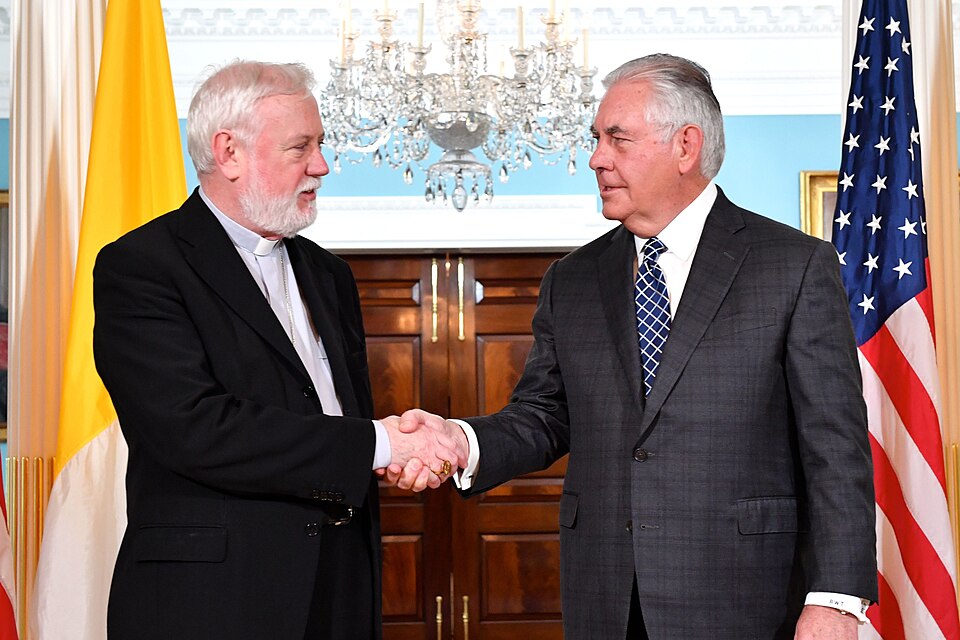
This does not prove that Washington, the Holy See and Moscow are preparing a single coordinated initiative.
But it is unquestionably a diplomatic anomaly worthy of close attention.
When intelligence channels and high-level diplomacy become active at the same time, it usually signals that important consultations are taking place behind the public messaging.
And as Russia moves strategic systems such as Poseidon toward operational maturity, the question becomes unavoidable:
What is happening?
CONSULTATIONS WITHOUT EUROPE
There is one final absence that is difficult to ignore: the European Union.
At the heart of this crisis is a war being fought on European soil — a war that directly affects the security of the entire continent.
And yet, in the CIA director’s confidential mission to Moscow and in the contacts that have emerged so far, Brussels does not appear as a central participant in the negotiating channel. It was neither notified nor consulted.
Geopolitically, that suggests that Washington, Moscow and the Vatican do not view the European Union as a central interlocutor in these talks.
Washington is communicating directly with Moscow through the head of its intelligence service, the Holy See is simultaneously activating its own diplomatic channel.
Kyiv was informed of the presence of the American delegation and, according to reports, Washington even asked Ukraine temporarily to suspend certain attacks.
The European Union, at least based on the public picture available today, remains outside any known consultation — secret or public.
We cannot know whether individual European governments or EU institutions were informed through confidential channels.
But that is precisely the point.
What does not emerge is a Europe setting the agenda.
What emerges instead is a Europe whose security is being discussed through direct strategic consultations among other major players.
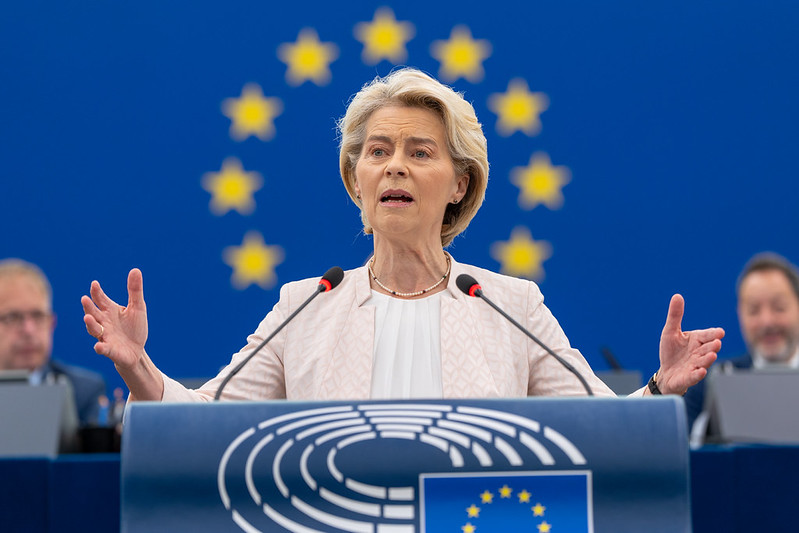
The paradox is striking..
Europe is one of the largest economic blocs on the planet. It provides extensive financial and military support to Ukraine and is geographically the territory most exposed to the consequences of any Russia-NATO escalation.
Yet its ability to convert that economic weight into geopolitical autonomy and unified negotiating power now appears politically paralyzed.
And that is one of the most significant geopolitical signals in the entire affair.
BREAKING NEWS — UPDATE: RATCLIFFE IN MOSCOW
As this article was being prepared for publication, an important new official confirmation emerged.
For the first time, the Kremlin acknowledged the general nature of CIA Director John Ratcliffe’s mission.
Kremlin spokesman Dmitry Peskov said Ratcliffe’s August 25 visit involved “contacts between Russian and American security/intelligence services.”
This was therefore no longer simply an unannounced American visit of undefined purpose.
A second point has now also been confirmed: Ratcliffe did not meet Vladimir Putin.
Peskov said today, August 26, that “no meetings with Putin were planned.”
That removes — at least on the basis of currently available information — one of the most significant theories circulating yesterday.
What remains unconfirmed is the identity of Ratcliffe’s principal interlocutor.
Sergei Naryshkin remains the most logical candidate. He heads Russia’s Foreign Intelligence Service, the SVR, and Ratcliffe and Naryshkin had already established a direct channel in March 2025, agreeing to maintain regular contact.
But there is still no confirmation that the two men met face-to-face yesterday.
There is also an important clarification regarding Ukraine.
According to an informed source, Kyiv knew that an American delegation would be traveling to Russia but was initially not told that Ratcliffe would be part of it.
Ukrainian officials are expected to receive a subsequent briefing on the mission.
Washington also asked Kyiv not to strike Moscow or St. Petersburg while the delegation was in Russia.
As for the substance of the conversations, a sharp distinction must be maintained between what is known and what remains speculation.
There is still no confirmation that Ratcliffe discussed Iran, the risk of Russia-NATO escalation, nuclear weapons or an ultimatum concerning Ukraine.
American sources and analysts regard Ukraine and Russian support for Iran as two plausible explanations.
The Washington Post has also noted that U.S. intelligence is monitoring the possibility of Russian action against NATO countries.
But at this stage, those are contexts and hypotheses — not the confirmed agenda of the mission.
One logistical detail nevertheless reinforces the exceptional nature of the operation.
The C-17A Globemaster III that departed Joint Base Andrews stopped in Riga, arrived at Vnukovo shortly after 9 a.m. and left Moscow after 5:30 p.m.
The Washington Post also reported a second U.S. aircraft, a C-40B used to transport senior officials, which arrived in Riga but was not subsequently tracked flying into Moscow.
The C-17 remained in Russia for approximately eight and a half hours.
The substantive development, therefore, is now clear:
We can say with confidence that Ratcliffe traveled to Moscow for direct contact between U.S. and Russian intelligence services; that Putin was not his interlocutor; and that Kyiv will receive a briefing.
What remains secret is who sat across the table from Ratcliffe, what message he carried and what result he obtained.
Those three elements are precisely what could transform the episode from an important confidential meeting into a geopolitical event of major significance.
CIA AND THE HOLY SEE IN MOSCOW: WHY?
Ultimately, the possibility that the talks concerned prisoner exchanges and an end to the special operation in Ukraine may be one of the options on the table.
There are almost certainly classified issues that will never surface in public reporting.
But the simultaneous development of the Poseidon mission offers another, potentially even more significant explanation.
Russia is introducing a new class of weapons of mass destruction capable of operating along adversaries’ coastlines.
That is causing considerable concern both in the United Kingdom and the United States.
A new strategic landscape with global implications is taking shape — one that many still appear to underestimate — one that many people do not appear to fully understand.
And it represents a change of enormous importance because we are entering an entirely new phase: one that may precede the use of nuclear weapons.
It is also highly probable that Putin is considering a much more intense ground offensive designed to break Kyiv’s resistance and bring the war to an end.
And now (see breaking news below) Russia has issued one of its starkest warnings to a NATO country since the war in Ukraine began: menacing UK for their war activities in Ucraine against Russia.
That places NATO in an increasingly uncomfortable position.
Alliance countries are providing weapons as well as technical and military assistance that are inflicting severe damage inside Russia.
In the event of such an intensified offensive, Moscow could regard all NATO military personnel present in Ukraine as potential targets, creating the risk of an unprecedented escalation.
The coming days may offer a clearer picture of where this is heading — and whether additional information begins to emerge.
August 27, 2026 – BREAKING NEWS and update:
🔴 RUSSIA–UK: MOSCOW ESCALATES ITS WARNING
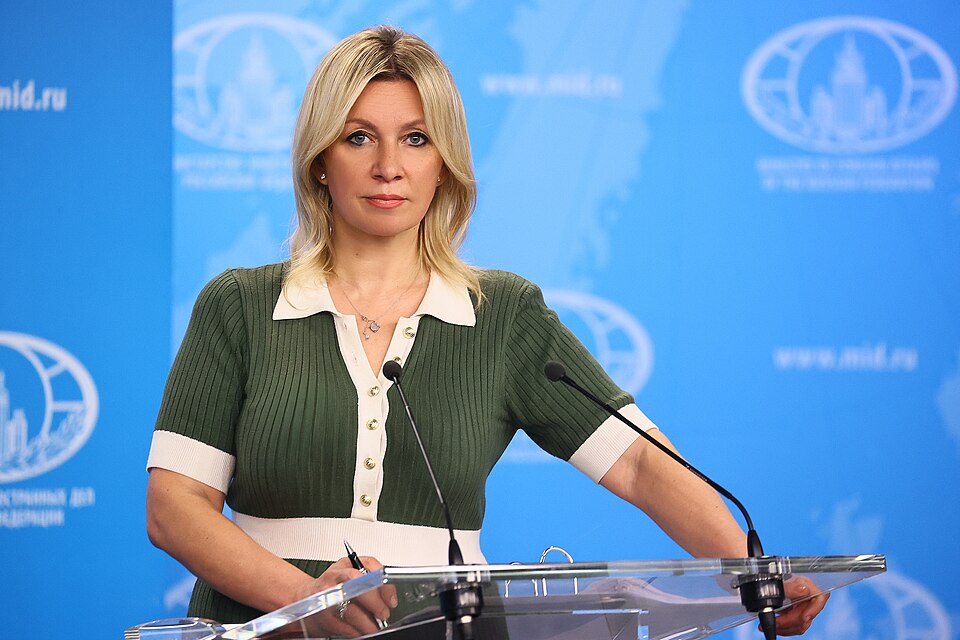
Russian Foreign Ministry spokeswoman Maria Zakharova said Russia could strike British military installations and assets “in Ukraine and beyond its borders” in retaliation for Ukrainian attacks using British-supplied long-range missiles.
She warned of “catastrophic consequences” if London does not change course.
THE FLASHPOINT: STORM SHADOW
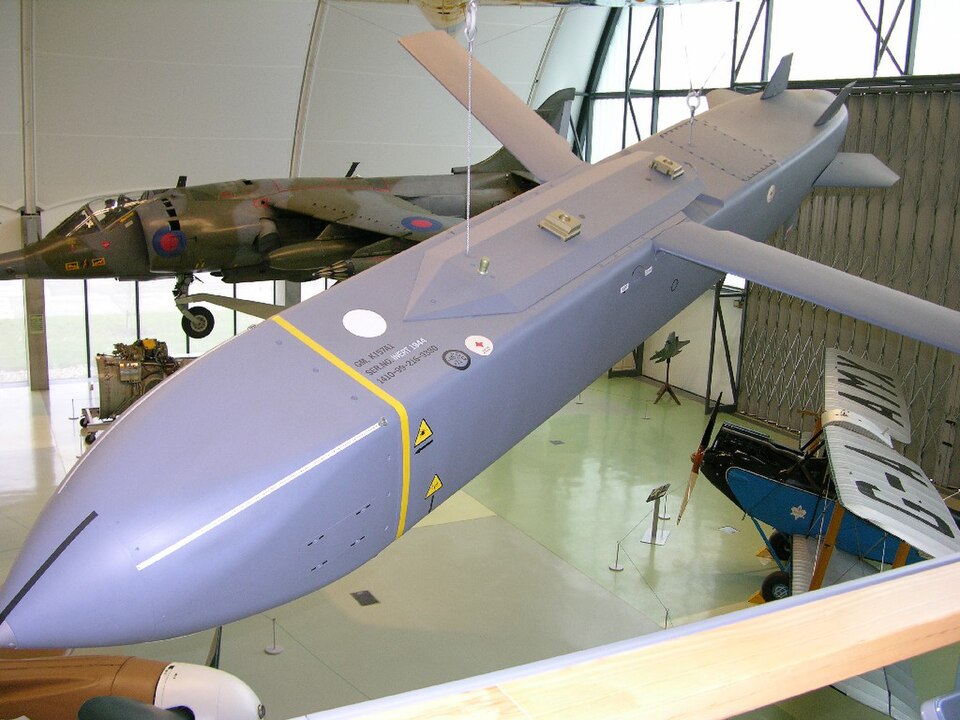
Moscow accuses Ukraine of using British-supplied Storm Shadow cruise missiles against Russian-controlled Donetsk. At the same time, London is expanding Kyiv’s long-range strike capabilities.
WHAT WE KNOW
Russia has explicitly threatened British military assets, including targets outside Ukraine.
At the moment there is no evidence that Moscow has decided to attack British territory, and no publicly confirmed Western warning of an imminent Russian strike on the UK.
WHY IT MATTERS
Britain is a nuclear-armed NATO member. A deliberate Russian strike on British military infrastructure on NATO territory would mark a dramatic escalation and could raise the issue of NATO’s collective-defense commitments.
This comes as Russia intensifies attacks on Ukraine, CIA Director John Ratcliffe holds direct talks with Russian intelligence chief Sergei Naryshkin, and Washington reportedly warns Moscow against testing NATO.
A Russia–NATO confrontation is not imminent based on the evidence available. But the risk of escalation is becoming harder to ignore.
🌐 Follow Boundless for real-time updates on the developments that matter — and the context you need to understand them.
📌 Primary source: Reuters, August 27, 2026.
SOURCES AND BIBLIOGRAPHY — POSEIDON / STATUS-6 / KANYON
Congressional Research Service (CRS). Russia’s Nuclear Weapons: Doctrine, Forces, and Modernization.
CRS — Russia’s Nuclear Weapons: Doctrine, Forces, and Modernization
Norman Polmar. “Russia Introduces a New Category of Naval Strike Weapon.” U.S. Naval Institute Proceedings, January 2026.
USNI Proceedings — Russia Introduces a New Category of Naval Strike Weapon
Norman Polmar. “‘Status-6’ Russian Drone Nearly Operational.” U.S. Naval Institute Proceedings, April 2019.
USNI Proceedings — ‘Status-6’ Russian Drone Nearly Operational
Thomas L. Siu. “Autonomous Nuclear Torpedoes Usher in a Dangerous Future.” U.S. Naval Institute Proceedings, May 2022.
USNI Proceedings — Autonomous Nuclear Torpedoes Usher in a Dangerous Future
Joshua M. Portzer. “Kanyon’s Reach: Rethinking the Nuclear Triad in the Autonomous Age.” U.S. Naval Institute Proceedings, July 2020.
USNI Proceedings — Kanyon’s Reach
H. I. Sutton. “Russia’s New ‘Poseidon’ Super-Weapon: What You Need To Know.” Naval News, March 3, 2022.
Naval News — Russia’s New ‘Poseidon’ Super-Weapon
Silky Kaur. “One nuclear-armed Poseidon torpedo could decimate a coastal city. Russia wants 30 of them.” Bulletin of the Atomic Scientists, June 14, 2023.
Bulletin of the Atomic Scientists — Poseidon Analysis
On the alleged “radioactive tsunami”
B. B. Kapochkin, N. V. Kucherenko, V. V. Kuzmenko, R. V. Sokolovskyi. “Assessment of the Effectiveness of the ‘Poseidon’ Nuclear Torpedo in the Aspect of Tsunami Wave Generation.” Collection of Scientific Works of Odesa Military Academy, 2025. DOI: 10.37129/2313-7509.2025.24.8.
Odesa Military Academy — Full Study
DOI — 10.37129/2313-7509.2025.24.8
Natalie Huet. “What is Russia’s Poseidon nuclear drone and could it wipe out the UK in a radioactive tsunami?” Euronews Next, May 4, 2022.
Euronews — Poseidon and the Radioactive-Tsunami Claim
