DIGITAL SAFETY — OR A NEW FRONTIER IN THE CONTROL OF INFORMATION?
BOUNDLESS TECH ALERT
 Europe is quietly reshaping the rules of the digital world.
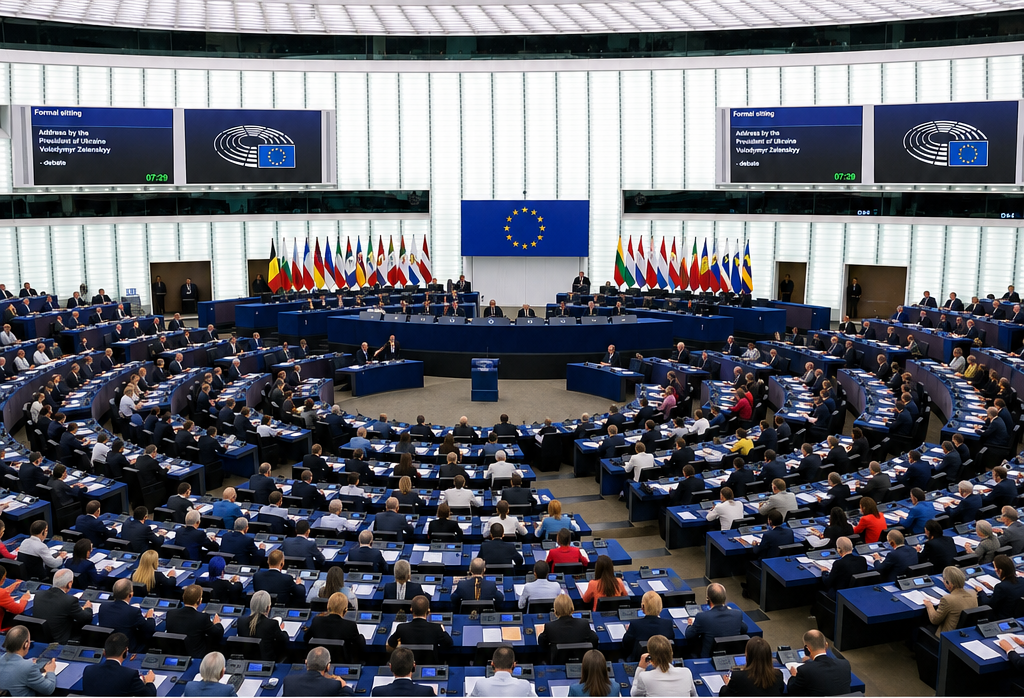
On August 31, 2026, the European Commission officially designated ChatGPT as a “Very Large Online Search Engine” (VLOSE) under the European Union’s Digital Services Act.
The formal reason is straightforward: ChatGPT reported reaching at least 45 million average monthly users in the European Union, crossing the threshold that triggers the DSA’s most stringent obligations for major online services.
On paper, this may sound like just another piece of EU tech regulation. It is not.
Because behind this seemingly bureaucratic designation lies a much larger question:
HOW MUCH POWER SHOULD GOVERNMENTS HAVE OVER THE SYSTEMS THROUGH WHICH MILLIONS OF PEOPLE SEEK INFORMATION?
WHAT ACTUALLY CHANGES FOR CHATGPT?
What it does mean is that ChatGPT is entering the DSA regime reserved for the European Union’s largest digital services and will become subject to the European Commission’s direct supervision for the additional obligations imposed on VLOSEs.
Among those obligations is the requirement to assess and mitigate what European law calls “systemic risks” arising from the service and its algorithmic systems.
And this is where things get much more serious.
WHAT EXACTLY IS A “SYSTEMIC RISK”?
The categories identified by the European Commission include risks associated with:
 illegal content;
the protection of minors;
users’ physical and mental well-being;
fundamental rights;
electoral processes;
public security.
Many of these objectives are entirely legitimate; few reasonable people would object to fighting criminal activity, protecting children or countering genuinely organized manipulation campaigns.
The problem begins when governments gain the power to regulate categories broad enough to mean very different things depending on who is interpreting them.
For example:
 Who ultimately determines when information becomes a threat to “public security”?
Who decides when information poses a risk to an “electoral process”?
Who defines what constitutes harmful manipulation rather than legitimate political dissent?
And where, exactly, does protecting citizens end and controlling information begin?
CHATGPT IS NO LONGER JUST SOFTWARE

This may be the most important aspect of the entire story.
Millions of people now use artificial intelligence to understand:
 wars and geopolitics
 politics and government
 science and medicine
 economics
 history
 energy
 technology
 artificial intelligence itself
AI systems such as ChatGPT are becoming something unprecedented: a gateway between ordinary citizens and vast amounts of the world’s information.
That makes regulation almost inevitable, but it also means that bad regulation could have extraordinary consequences: controlling an AI information gateway is fundamentally different from regulating an ordinary website.
THE REAL ISSUE IS NOT ONLY THE RULE BEING ADOPTED TODAY. IT IS THE POWER THAT COULD EXIST TOMORROW.
Imagine a future government deciding that a particular interpretation of a war, public-health crisis, election, immigration controversy or government policy represents a potential risk to public security.
There would not necessarily have to be an explicit order saying: “This opinion is prohibited.”
Information control in the algorithmic age could be far more subtle.
A system could theoretically:
 reduce the visibility of certain information;
prioritize some sources over others;
attach warnings to certain viewpoints;
make certain answers more difficult to obtain;
restrict the circulation of particular material;
alter the way controversial issues are framed.
But the real concern goes much further; it is about the regulatory architecture now being constructed — and how powers created today for legitimate purposes could be interpreted and exercised tomorrow.
That distinction matters.
THE QUESTION EVERYONE SHOULD BE ASKING
For Americans, for example, the European approach may seem distant. It shouldn’t. The United States has a political and constitutional tradition built around an unusually strong suspicion of government interference with speech.
Europe comes from a different legal and political tradition, one that generally gives governments considerably more latitude to regulate speech, platforms and digital spaces in pursuit of competing public interests.
None of this means European policymakers have authoritarian intentions. But the difference matters.
Because Europe is now building a regulatory architecture capable of exerting substantial influence over the world’s largest information platforms.
And once an infrastructure of control exists, the most important question is no longer simply why it was created. It is what a future government could do with it.
AND THEN THERE IS “CHAT CONTROL”
This is where Europe’s digital-policy debate becomes even more troubling.
Separate from the Digital Services Act, the European Union has spent years debating legislation commonly known as “Chat Control,” formally connected to combating online child sexual abuse.
The stated goal — protecting children and combating child sexual abuse material — is unquestionably important, but the methods considered during this legislative battle have generated fierce controversy.
European policymakers have debated detection mechanisms capable of identifying prohibited material in digital communications.
The stakes become much higher when private messages and end-to-end encryption enter the picture.
Because an end-to-end encrypted conversation is genuinely private precisely because an intermediary cannot read its contents.
Critics have therefore warned that indiscriminate scanning of private communications could create an unprecedented surveillance infrastructure.
Cybersecurity specialists, privacy advocates, digital-rights organizations and European politicians themselves have raised concerns about the implications for privacy, cybersecurity and fundamental rights.
And the controversy is not theoretical.
In July 2026, the EU restored an interim framework allowing online providers to voluntarily detect and remove certain child sexual abuse material while negotiations continue over a permanent system.
Importantly, the European Parliament successfully inserted protections excluding end-to-end encrypted interpersonal communications from that temporary framework.
That is evidence that democratic resistance to indiscriminate surveillance still exists inside the European institutions themselves.
But the long-term legislative battle is not over.
THE DSA AND “CHAT CONTROL” ARE NOT THE SAME LAW
That distinction is crucial: the Digital Services Act and the legislation commonly described as Chat Control are separate legal frameworks, but the two debates raise the same fundamental question about the future of digital society:
HOW MUCH POWER ARE DEMOCRATIC SOCIETIES WILLING TO GIVE GOVERNMENTS OVER DIGITAL COMMUNICATION AND ACCESS TO INFORMATION IN THE NAME OF SAFETY?
ARTIFICIAL INTELLIGENCE IS NOW THE NEW FRONTIER
Consider what a citizen can ask an AI system today:
 “Explain why this war actually started.”
“Show me the arguments made by both sides.”
“Which sources contradict the government’s account?”
“What mistakes did public institutions make?”
“What does the government say, and what do its critics say?”
“Which claims once dismissed as misinformation were later shown to be true?”
The freedom to ask these questions — and to receive answers that have not been politically predetermined — may become one of the defining components of freedom of information in the 21st century.
That is precisely why democratic societies should proceed with extraordinary caution.
THERE IS AN ENORMOUS DIFFERENCE BETWEEN:
combating illegal content
and
determining what information citizens should be allowed to encounter.
EUROPE’S GREAT CONTRADICTION

The European Union says the Digital Services Act is designed to protect citizens, pluralism, public safety and fundamental rights: surely that case deserves to be taken seriously.
The DSA also contains transparency requirements, procedural safeguards and avenues for judicial review, but those safeguards do not eliminate the larger question.
In fact, the more powerful the regulatory machinery becomes, the more essential those safeguards become.
Europe therefore needs stronger — not weaker — safeguards for:
transparency;
accountability;
judicial review;
democratic oversight;
freedom of expression;
privacy;
pluralism of information.
Because the fundamental question should not be:
“Regulation or no regulation?”
The real question is:
WHO WATCHES THE WATCHERS?
 Who guarantees that fighting “disinformation” does not eventually become political selection of information?
Who determines what truly constitutes a threat to public security?
Who prevents tools created by today’s democratic governments from being used differently by tomorrow’s governments?
Who guarantees that unpopular, minority, controversial or politically inconvenient opinions remain accessible?
And who protects the citizen’s right to search for information before an institution has decided what that citizen should be allowed to see?
THE AUTHORITARIAN RISK EUROPE CANNOT AFFORD TO IGNORE
This is the danger that deserves far more attention.
Authoritarianism does not always arrive with soldiers in the streets, opposition leaders in jail, or newspapers being shut down.
In the digital age, the erosion of freedom can look very different: it could emerge gradually through administrative regulations, algorithmic requirements, mandatory risk-mitigation systems, surveillance capabilities and increasingly expansive definitions of what constitutes harmful information.
History teaches a simple lesson: powers created for good reasons do not remain forever in the hands of the people who created them.
Governments change.
Political majorities change.
Definitions change.
Emergencies change.
But the machinery remains.
So the real test is not whether the European Commission intends to censor ChatGPT today.
The more important question is whether Europe is constructing an institutional and technological framework that could make increasingly centralized control over information possible tomorrow.
WHY ALL SHOULD CARE
For many, this debate still feels remote.
But the technology is global.
The same AI systems, social networks, search engines and communications platforms operate on both sides of the Atlantic.
Rules created for a market of roughly 450 million people can influence how global technology companies design their products everywhere.
That phenomenon is sometimes called the “Brussels Effect”: companies may adapt globally to European rules because maintaining entirely separate systems for different jurisdictions can be expensive or impractical.
So what happens in Brussels does not necessarily stay in Brussels.
The European experiment in digital governance may ultimately help determine what the global information environment looks like.
THIS IS ABOUT MUCH MORE THAN CHATGPT
What is happening in Europe is ultimately not about OpenAI, it is about the kind of digital society we are building. Europe is constructing one of the most ambitious systems of digital regulation in the democratic world, it could become an international model for protecting citizens and fundamental rights.
But if democratic safeguards prove inadequate, the very same architecture could also become an extraordinarily powerful mechanism for influencing what information citizens can access and how that information reaches them.
The problem is that, at first, those two futures may look remarkably similar.
That is precisely why this debate matters now.
Freedom of information rarely disappears because someone flips a switch.
It can erode gradually.
Through technical regulations.
Through algorithms.
Through risk-mitigation requirements.
Through administrative classifications.
Through surveillance justified by exceptional circumstances.
Through decisions made, almost always, in the name of protecting us.
BOUNDLESS
Raising these concerns is not an attack on Europe, nor does it mean opposing every attempt to regulate artificial intelligence.
It means drawing a line: public safety, child protection, national security and the fight against disinformation must never become excuses for giving governments the power to decide what citizens may read, search for, discuss — or ask an AI.
Regulating artificial intelligence may be necessary.
REGULATING ACCESS TO KNOWLEDGE IS SOMETHING ENTIRELY DIFFERENT.
And the line between the two deserves to be watched very, very carefully.
SOURCES
European Commission — Digital Services Act.
European Commission — “Commission designates ChatGPT, Reddit, Roblox under Digital Services Act,” August 31, 2026.
Reuters — “ChatGPT, Reddit, Roblox to adhere to EU’s ‘very large platform’ rules,” August 31, 2026.
Council of the European Union — legislation and negotiations concerning the detection and removal of online child sexual abuse material.
European Parliament — legislative documentation concerning privacy, encryption and online child sexual abuse legislation.
#Boundless#ChatGPT#DigitalServicesAct#ChatControl#DigitalFreedom