



Brussels, July 9, 2026
On July 9, 2026, the European Parliament approved an extension of the temporary framework known as Chat Control 1.0, legislation designed to help combat online child sexual abuse. Its stated objective is one that few would dispute: protecting children and helping authorities identify those responsible for one of society’s most horrific crimes.
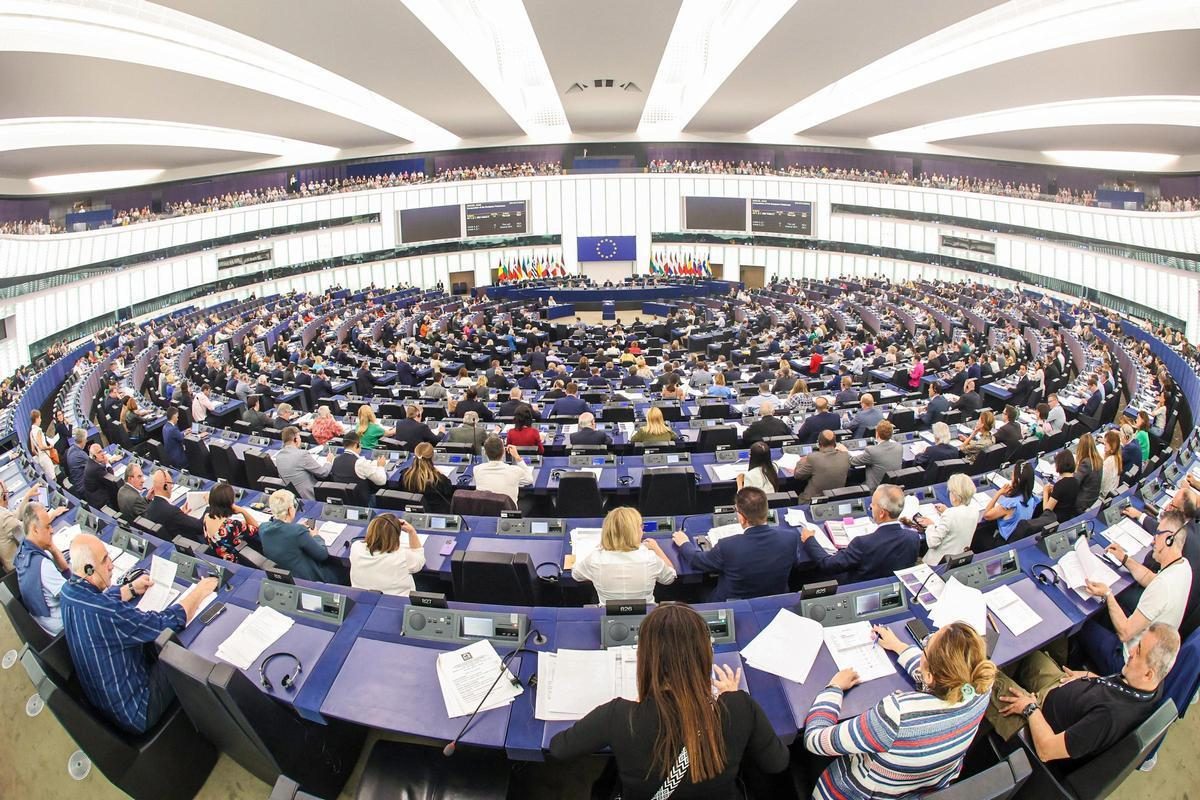
The goal itself is not controversial: protecting children is both a moral obligation and a legal responsibility shared by every democratic nation.
What has become controversial is the method; the events surrounding the parliamentary vote have raised a question that reaches far beyond this single piece of legislation:
How much authority should governments be allowed to exercise in the name of public safety?
That question has sharply divided constitutional scholars, lawmakers, cybersecurity experts, privacy advocates, and millions of Europeans, because the debate is no longer only about child sexual abuse.
It has become a debate about one of the central principles of every liberal democracy: the balance between security and individual freedom.
For centuries, Western legal systems have operated according to a straightforward principle: investigators gather evidence against individuals who are reasonably suspected of committing a crime. Only then do courts authorize surveillance or other investigative measures.
A FUNDAMENTAL SHIFT
Critics argue that Chat Control risks reversing that logic: instead of beginning with a specific suspect, the system could allow an enormous number of private communications to be examined in the hope of identifying criminal activity.
At first glance, the distinction may appear technical.
It is not.
According to many legal scholars and privacy advocates, it represents a profound change in the philosophy of criminal investigations because rather than targeting suspects, authorities would increasingly rely on broad technological screening before any individualized suspicion exists.

Supporters reject that interpretation: they argue that today’s digital environment requires new investigative tools to confront criminal networks that increasingly operate online and across borders.
The disagreement is therefore not about the seriousness of child exploitation, it is about where democratic societies should draw the line between protecting children and protecting civil liberties.
THE VOTE THAT SPARKED THE CONTROVERSY
Another aspect of the July 9 vote has intensified the debate: for the third time, more Members of the European Parliament voted against the proposal than in favor of it.
A total of 314 Members voted against extending Chat Control 1.0, while 276 supported the measure.
Under ordinary circumstances, those numbers would appear to indicate defeat.
Instead, the proposal passed. Why?
The explanation lies in parliamentary procedure: under the rules governing this particular vote, opponents needed an absolute majority of 361 votes to block the extension but they fell short of that threshold.
As a result, the proposal was adopted despite receiving fewer affirmative votes than negative ones.
For supporters, the outcome simply reflected the Parliament’s established rules; for critics, it highlighted a procedural paradox that deserves far greater public attention.

Either way, the vote immediately became one of the most closely watched digital rights decisions in recent European history.
A DEBATE THAT GOES FAR BEYOND THIS LAW
The controversy surrounding Chat Control did not begin in July 2026: for several years, the proposal has moved through European institutions, national governments, courts, digital rights organizations, child protection groups, and cybersecurity experts, each new version has revived the same fundamental question.
Can democratic societies strengthen the fight against child exploitation without fundamentally changing the way private communications are protected?
There are no simple answers.
Child sexual abuse networks increasingly exploit anonymous platforms, encrypted services, and the dark web, making investigations extraordinarily difficult.
At the same time, some experts argue that governments should invest far more aggressively in targeted investigative capabilities, particularly new AI-assisted technologies capable of identifying suspects through precision investigations rather than broader monitoring.
The debate, therefore, is no longer simply about technology, it is about the future relationship between citizens, governments, privacy, and digital freedom.
And to understand why Europe has reached this point, it is necessary to go back to where the story first began.
HOW EUROPE GOT THERE
The debate over Chat Control did not emerge overnight: its origins date back to 2021, when the European Union adopted a temporary exemption to its privacy rules governing electronic communications.
The objective was straightforward.
Major technology companies—including Meta, Google, Microsoft, and other online service providers—were allowed to continue using automated tools to detect known child sexual abuse material, report suspicious content to law enforcement, and help identify victims.
Few questioned the need: the circulation of child sexual abuse material had become increasingly sophisticated, spreading across encrypted platforms, cloud services, and international networks. According to Europol and several international organizations, the volume of illegal content being identified online had risen dramatically, placing unprecedented pressure on investigators across Europe.
The temporary measure was presented as a practical response to an urgent problem. Few imagined it would become one of the most controversial digital rights debates in the European Union.
FROM A TEMPORARY EXCEPTION TO A PERMANENT FRAMEWORK
The turning point came in May 2022 when the European Commission concluded that the temporary arrangement no longer provided sufficient tools to combat online child exploitation and introduced a far more ambitious proposal—one that would later become widely known as Chat Control 2.0.
This proposal transformed the discussion.
The original framework largely relied on voluntary detection measures by online platforms: the new proposal envisioned a broader legal framework that, according to its critics, could eventually affect encrypted communications and challenge the protections offered by end-to-end encryption.
That is where the political divide began to widen.
Supporters argued that criminal organizations were adapting faster than investigators and that law enforcement agencies needed stronger technological capabilities to keep pace.
Opponents agreed that child protection must remain a top priority, but their concern was different.
They questioned whether expanding surveillance powers was compatible with the legal principles that have long defined democratic societies.
THE PRINCIPLE AT THE CENTER OF THE DEBATE
For generations, criminal investigations in democratic nations have followed a consistent model: authorities investigate individuals based on evidence or reasonable suspicion, but only after judicial authorization are surveillance measures employed.
Critics argue that Chat Control represents a significant departure from that tradition: instead of focusing on specific suspects, they fear that automated systems could examine vast numbers of private communications before any individualized suspicion exists.
For many constitutional scholars, this is more than a legal dispute, it is a constitutional one.
The confidentiality of private communications has long been regarded as a cornerstone of European democracy; restrictions on that right have traditionally required strict judicial oversight and clear demonstrations of necessity and proportionality.
According to opponents of the proposal, Chat Control risks shifting that balance.
If private communications are routinely analyzed by automated systems before reaching their intended recipients, they argue, the distinction between targeted investigations and generalized monitoring becomes increasingly blurred.
THE BIG BROTHER CONCERN

Another criticism goes beyond today’s legislation: some legal scholars warn that once a principle of preventive digital screening has been accepted for one category of crime, it may eventually be expanded to others.
Today’s justification is the fight against child sexual abuse; tomorrow, critics ask, could similar mechanisms be proposed for terrorism, organized crime, hate speech, disinformation, or future emergencies?
Supporters reject the comparison, arguing that child sexual abuse is an exceptional crime requiring exceptional investigative tools.
Critics counter that democratic societies must be especially cautious whenever extraordinary powers become normalized.
Many of them point to the COVID-19 pandemic as an example: during that period, governments across Europe introduced extraordinary emergency measures that temporarily restricted certain individual freedoms in response to an unprecedented public health crisis.
According to critics of Chat Control, that experience illustrates how exceptional circumstances can reshape the relationship between governments and individual rights—sometimes in ways that continue long after the original emergency has passed.
Whether that comparison is persuasive remains a matter of political and legal debate.
What is beyond dispute is that the discussion surrounding Chat Control has expanded far beyond technology: it has become a broader conversation about how democratic societies should respond to new threats while preserving the civil liberties they were built to protect.
BEYOND CHAT CONTROL: WHAT KIND OF EUROPE IS BEING BUILT?

The debate over Chat Control is ultimately about far more than a single piece of legislation, it raises a broader question about the kind of digital society Europe wants to build in the decades ahead.
At one end of the discussion lies an undeniable reality: child sexual abuse is among the most devastating crimes imaginable, and governments have both a moral and legal responsibility to pursue those responsible with every effective tool available.
At the other end lies another principle that has defined democratic societies for generations: the protection of individual rights and the confidentiality of private communications.
History suggests that the tension between security and liberty is not new: every generation has faced its own defining threats—terrorism, organized crime, global pandemics, cyberattacks, and war.
Each has forced governments to confront the same difficult question:
How much freedom should be limited in the name of collective security?
There is no universally accepted answer.
Supporters of Chat Control believe stronger digital tools are essential if investigators are to identify victims more quickly, dismantle criminal networks, and prevent further abuse.
Critics do not dispute those objectives, their concern is that the legal principles established today may shape government authority tomorrow.
Once new forms of digital monitoring become accepted in one context, they argue, future lawmakers may be tempted to extend similar powers to entirely different areas of public policy.
Whether that concern proves justified remains to be seen: what is certain is that the discussion extends well beyond software, encryption, or artificial intelligence, it concerns the future relationship between governments and the citizens they govern.
THE ANOMALY: AN UNUSUAL PARLIAMENTARY OUTCOME
The parliamentary vote of July 9, 2026, will likely be remembered not only for its outcome but also for the procedure that produced it: a total of 314 Members of the European Parliament voted against extending Chat Control 1.0. 276 voted in favor.
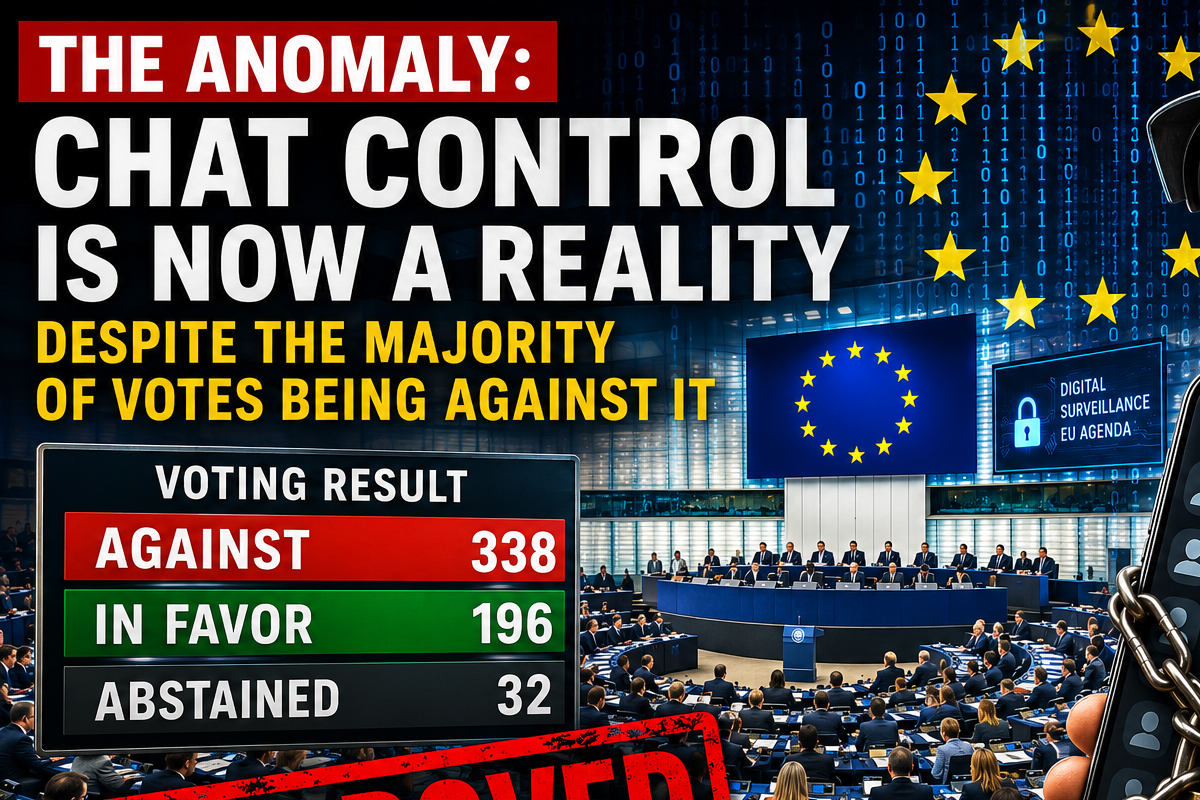
Yet the proposal was approved because opponents failed to reach the 361-vote absolute majority required to block the extension.
For some observers, this simply reflects the rules governing parliamentary procedure, for others, it represents a political paradox that deserves closer public scrutiny.
Regardless of one’s position, the vote has become one of the defining moments in Europe’s ongoing debate over digital rights.
THE ROLE OF JOURNALISM
Moments like these also highlight the responsibility of journalism.
Not journalism driven by fear.
Not journalism shaped by political loyalties or ideological commitments.
And not journalism that merely amplifies competing narratives without examining them.
The public interest is best served by reporting that verifies facts, explains complex legal and technological issues, presents competing viewpoints fairly, and allows readers to reach their own informed conclusions.
That is the role investigative journalism has played in democratic societies for generations, and it remains just as essential today.
THE QUESTION THAT REMAINS
The debate surrounding Chat Control has no easy resolution; Protecting children and preserving civil liberties are not opposing values, both are fundamental responsibilities of a democratic society.
The challenge facing Europe is finding a way to safeguard one without unnecessarily weakening the other: as technology continues to evolve, so too will the laws designed to regulate it.
The real question is not simply how governments should respond to emerging threats, it is whether democratic institutions can continue adapting to those threats while preserving the freedoms they were created to protect.
That question will not disappear with this vote.
The concern, critics argue, extends beyond Chat Control itself. They point to other recent European decisions—including policies related to the war in Ukraine—as examples of what they see as a widening gap between the priorities of European institutions and the views expressed by many citizens across the continent.
Whether one agrees that assessment or not, they argue that the Chat Control vote has reinforced the perception that procedural outcomes can prevail even when more lawmakers vote against a proposal than in favor of it. To those critics, this is more than a legislative dispute. It is another sign of what they describe as an increasingly dystopian political landscape—one in which exceptional measures gradually become the new normal.
If anything, July 9, 2026 may be remembered as the day Europe began a much larger conversation about privacy, security, and the future of democracy in the digital age.

Pierluigi Tombetti
