



Boundless Editorial Version – Part I
Fonte originale: Biblical Archaeology Review
Autore: Aaron A. Burke, Professor of the Archaeology of Ancient Israel and the Levant at the University of California, Los Angeles.
WARRIORS FOR HIRE: MERCENARIES OF THE MEDITERRANEAN
The history of the ancient Mediterranean is often told through the rise and fall of kingdoms, the ambitions of rulers, and the military campaigns that reshaped entire regions. Yet behind many of these events stood a less visible but highly influential group of people: professional warriors who sold their military skills to foreign powers. These mercenaries operated across political and cultural boundaries, serving rulers far from their native lands and playing an important role in the conflicts that shaped the ancient world.
The significance of these warriors can even be seen in the biblical traditions concerning the rise of ancient Israel. Before becoming king, David himself is portrayed as a military leader who entered the service of a foreign ruler. Later, after ascending the throne, he continued to rely on professional soldiers and foreign fighters. His story reflects a broader military reality that characterized much of the eastern Mediterranean during the Late Bronze Age, roughly between 1550 and 1100 BCE.
Throughout this period, mercenaries were deeply involved in the political and military affairs of both major empires and smaller regional kingdoms. Powerful states such as New Kingdom Egypt and the Hittite Empire employed foreign warriors on a regular basis, while rulers throughout the Levant recruited them to strengthen their armies and defend their territories. Men from regions as distant as Cyprus, Anatolia, and Sardinia traveled eastward in search of military service, leaving traces of their presence in written records, artistic depictions, and archaeological remains.
THE SHARDANU AND EGYPT
Among the most thoroughly documented of these groups were the Shardanu, warriors whose history offers valuable insight into the wider phenomenon of Mediterranean mercenary activity. Their story not only illuminates the military networks of the Late Bronze Age but also helps explain the historical environment from which both the Philistines and the Israelites emerged.
The earliest known references to the Shardanu appear in the Amarna Letters of the fourteenth century BCE. Their name appears again during the reign of the Egyptian pharaoh Ramesses II. Egyptian sources describe the Shardanu as participants in an attempted invasion of Egypt around 1278–1277 BCE. Following their defeat, however, many of these warriors experienced a dramatic change in fortune. Rather than being eliminated, they were absorbed into the Egyptian military system and transformed from enemies into valuable soldiers.
Within only a few years of fighting against Egypt, Shardanu warriors appear in Egyptian reliefs commemorating the Battle of Kadesh, one of the most famous military confrontations of the ancient Near East. Fought around 1274 BCE between Egypt and the Hittite Empire, the battle is depicted in monumental reliefs that show Shardanu soldiers serving among the forces of Ramesses II. Their presence demonstrates how quickly defeated enemies could be incorporated into imperial armies when their military abilities were considered useful.
The Shardanu continued to appear in Egyptian records more than a century later during the reign of Ramesses III. Reliefs from the mortuary temple complex at Medinet Habu identify them among the groups commonly known today as the Sea Peoples. Alongside the Peleset, Tjeker, and Weshesh, the Shardanu are portrayed as part of the broader upheavals that affected the eastern Mediterranean at the end of the Bronze Age.
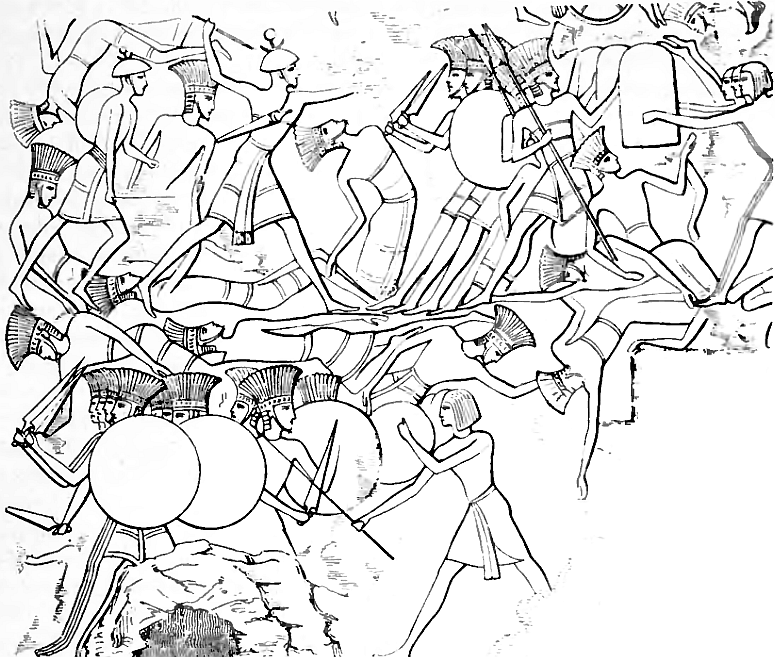
Yet these same reliefs also depict Shardanu warriors fighting on behalf of Egypt. This apparent contradiction reveals an important reality: the Shardanu were not a unified political entity acting with a single purpose. Rather, they were a population whose members could serve different rulers and participate in different military alliances depending on circumstances.
Egyptian inscriptions claim that after defeating these groups, Ramesses III settled many Shardanu in military strongholds throughout Egypt and incorporated them into imperial service. Whether entirely accurate or partly royal propaganda, these accounts indicate that foreign warriors became a permanent component of Egypt’s military structure during this period.
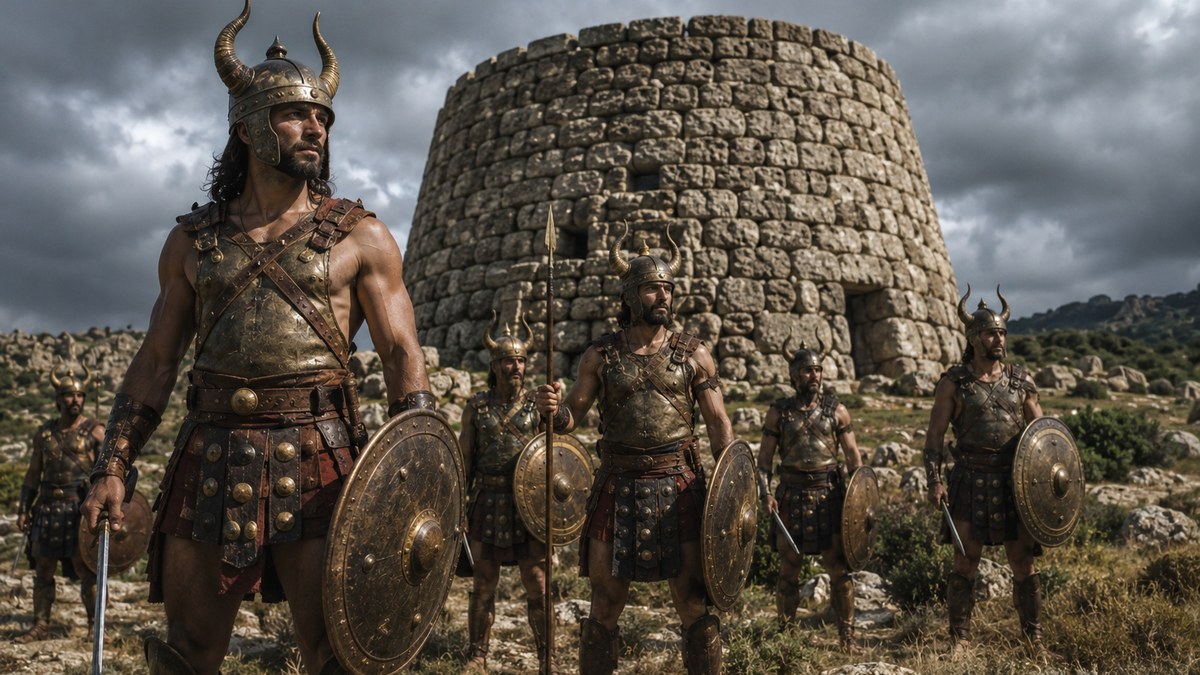
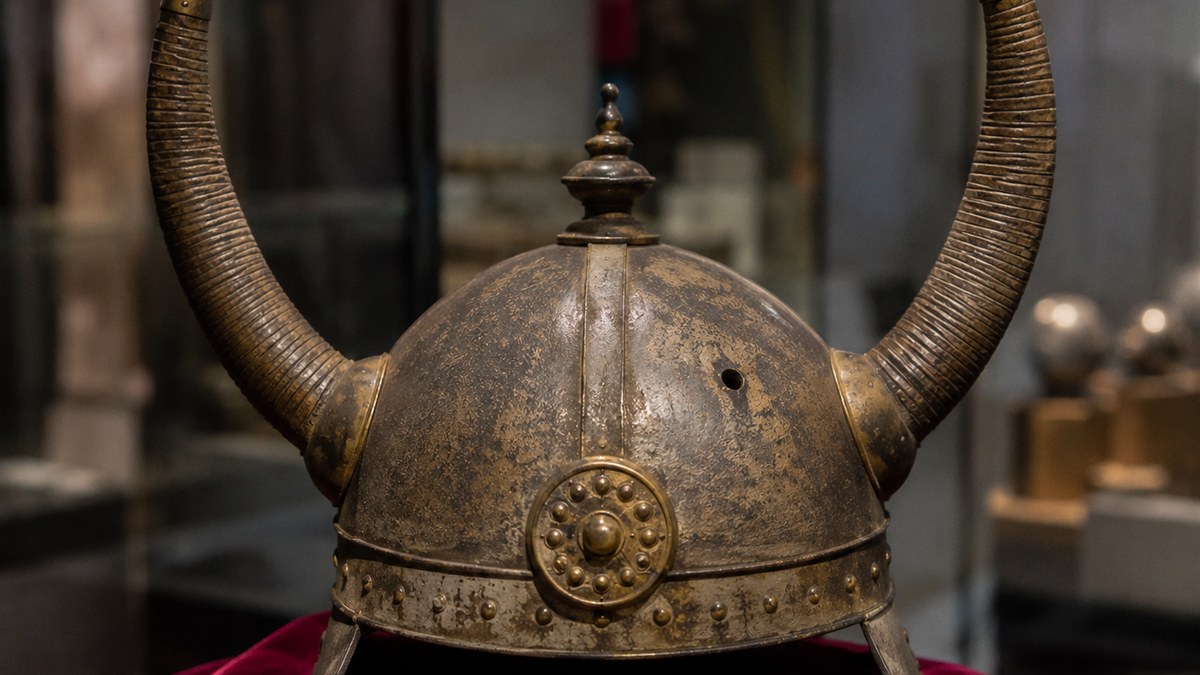
One of the most distinctive aspects of the Shardanu in Egyptian art is their appearance. They are consistently shown carrying long swords, round shields, and wearing helmets crowned with prominent horns. These details would later prove crucial in tracing their origins.
For generations, scholars debated the homeland of the Shardanu. The similarity between the names “Shardanu” and “Sardinia” suggested a connection, but earlier theories often proposed that the warriors had originally come from the eastern Mediterranean and only later gave their name to the island after settling there.
Over the last two decades, however, archaeological and historical evidence has increasingly supported a different interpretation. Many researchers now identify the Shardanu as indigenous inhabitants of Sardinia who gradually moved eastward during the Late Bronze Age, entering military service and becoming part of the complex political landscape of the eastern Mediterranean.
Their origins appear to lie within the remarkable Nuragic civilization of prehistoric Sardinia. Across the island stand thousands of megalithic settlements characterized by imposing stone towers known as nuraghi. Archaeologists have identified more than seven thousand such sites, many of which were founded during the middle of the second millennium BCE and remained occupied until the arrival of Phoenician influence centuries later.
These settlements reveal the existence of a society with a strong martial tradition. Excavations throughout Sardinia have uncovered numerous bronze figurines depicting warriors equipped with shields, spears, and distinctive horned helmets. Although many of these objects date to the Iron Age, their appearance closely resembles the way Shardanu warriors were represented in Egyptian reliefs centuries earlier.
Further evidence comes from the famous site of Mont’e Prama, where archaeologists discovered monumental limestone statues dating to around 800 BCE. These life-sized figures portray heavily armed warriors carrying shields, swords, bows, and quivers. While they belong to a later period, they suggest the persistence of a cultural memory rooted in an older warrior tradition that may stretch back to the Bronze Age.
Taken together, the archaeological evidence from Sardinia paints a picture of a society in which military identity occupied a central place. The similarities between the island’s indigenous warrior imagery and Egyptian depictions of the Shardanu strongly support the view that these famous mercenaries originated among the Nuragic communities of Sardinia and later ventured eastward in search of opportunity, wealth, and military employment.
Their story would not end there. Archaeological discoveries from Cyprus and the Levant provide increasingly compelling evidence that Sardinian warriors were present throughout the eastern Mediterranean, participating not only in warfare but also in the networks of trade and cultural exchange that connected distant regions during the Late Bronze Age.
End Part I
This Boundless version has been professionally summarized, translated, and edited for clarity and accessibility while preserving the original facts, arguments, and conclusions.
