



The Fauci, The Lancet, and WHO Controversies
BOUNDLESS GLOBAL INTELLIGENCE REVIEW
Boundless does not endorse any political party, ideology, or special interest. This article presents an objective interpretation of current events based on publicly available information and documented sources.
Washington – A fierce new confrontation on Capitol Hill between Senator Bernie Moreno and Dr. Anthony Fauci is rapidly developing into something far larger than a political dispute.
Once regarded as one of the world’s most trusted public health authorities, Fauci now finds himself under intense scrutiny over statements he made during the COVID-19 pandemic and the policies that followed.
The implications extend well beyond one individual.
For many observers, they raise a broader question: Can institutions once viewed as the highest authorities in science and global health—including the World Health Organization—still command the same level of public trust?
That question is now at the center of a growing debate in Washington.
While the issue has generated intense political discussion across the United States, much of Europe—and Italy in particular—has paid comparatively little attention to developments that many American commentators describe as historically significant.
🏛️ FAUCI | FROM THE FACE OF THE PANDEMIC TO THE SENATE HOT SEAT
For years, Anthony Fauci, the World Health Organization, and leading peer-reviewed medical journals such as The Lancet—widely regarded as one of the most prestigious scientific publications in the world—were treated as virtually unquestionable authorities.
Their recommendations were echoed by governments, health ministries, law enforcement agencies, television networks, newspapers, and digital platforms.
Scientific guidance became headlines – Headlines became public policy – Public policy reshaped the lives of billions of people.
Today, many believe that system has lost much of the unquestioned credibility it once enjoyed.
━━━━━━━━━━━━━━━━━━━━
🏛️ FAUCI | FROM THE FACE OF THE PANDEMIC TO THE SENATE HOT SEAT
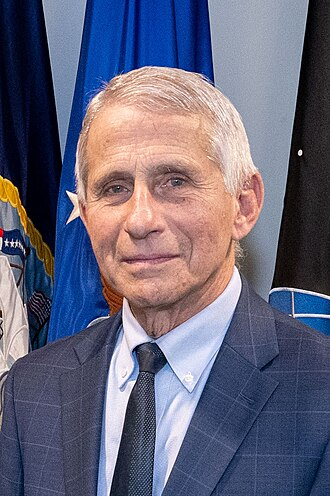
On July 29, 2026, Anthony Fauci appeared before the U.S. Senate Committee on Homeland Security and Governmental Affairs following alleged inconsistencies between his previous congressional testimony, internal communications, and documents gathered during investigations into the origins of COVID-19.
On August 6, 2026, the committee’s majority advanced a contempt of Congress resolution after Fauci invoked the Fifth Amendment more than one hundred times, declining to answer numerous questions posed by senators. Democratic members of the committee have challenged both the legal basis and the political motivations behind the initiative.
The senators’ allegations focus primarily on:
🔹 U.S. funding for coronavirus research conducted in Wuhan through intermediary organizations.
🔹 The technical definition of gain-of-function research and the manner in which Fauci described those projects before Congress. Critics argue that the research involved high-risk experiments designed to enhance viruses in ways that could increase their ability to infect humans. According to this interpretation, the COVID-19 pandemic may have originated from the accidental release of such a modified virus from a laboratory.
🔹 Allegations of false testimony. Senator Rand Paul contends that Fauci repeatedly misled Congress when, under oath, he denied that U.S. federal funding had supported gain-of-function research in Wuhan.
🔹 The role of public health authorities in promoting the narrative that the virus emerged naturally.
🔹 Potential discrepancies between public statements, private communications, and internal government documents.
These remain congressional allegations—not judicial findings; even so, the political significance is undeniable.
The man who, for years, represented the official face of American public health is now refusing to answer key questions before Congress while facing one of the most consequential investigations of his career.
Below is the complete Senate hearing. I encourage readers to watch it in its entirety o fully appreciate the intensity with which the United States is now reexamining the individuals and policies that shaped the COVID-19 response in light of newly released documents, Fauci’s personal diary, and the findings of the congressional subcommittee.
(To watch with English audio, select Settings → Audio Track → English.)
━━━━━━━━━━━━━━━━━━━━
📚 THE LANCET | THE STUDY THAT INFLUENCED THE WHO BEFORE COLLAPSING UNDER SCRUTINY
On May 22, 2020, The Lancet published a study on hydroxychloroquine authored by Mandeep Mehra, Sapan Desai, Frank Ruschitzka, and Amit Patel.
The paper claimed to analyze medical records from nearly 96,000 patients across 671 hospitals on six continents.
Approximately 15,000 patients had reportedly received hydroxychloroquine or chloroquine, while more than 81,000 served as controls.
The study concluded that the drugs were associated with significantly higher mortality rates and an increased risk of cardiac arrhythmias.
The impact was immediate: the World Health Organization temporarily suspended the hydroxychloroquine arm of its international Solidarity Trial, while governments and public health agencies around the world reassessed ongoing clinical trials based largely on findings published in one of medicine’s most respected journals.
Then came the questions.
More than 120 physicians and researchers—with later academic accounts placing the number at 146—signed an open letter raising serious concerns about the study’s methodology and the integrity of its underlying data.
Among the principal issues identified were:
🔹 The underlying raw data had never been made available.
🔹 The statistical code remained inaccessible.
🔹 Neither the participating countries nor the hospitals were identified.
🔹 Ethical oversight was inadequately documented.
🔹 Australian case numbers failed to match official national records.
🔹 The reported African data suggested that hospitals linked to Surgisphere had recorded an implausibly large share of the continent’s COVID-19 cases and deaths.
🔹 Statistical patterns appeared remarkably uniform across regions with vastly different demographics and healthcare systems.
Surgisphere—the company that supplied the database—was led by co-author Sapan Desai.
When independent auditors requested access to the underlying data, hospital contracts, and supporting documentation, the company did not provide the access necessary for a full independent audit.
As a result, the remaining authors acknowledged that they could no longer verify the primary data source and formally requested that the paper be withdrawn.
On June 4, 2020, The Lancet officially retracted the study.
That very same day, The New England Journal of Medicine also withdrew another paper based on the same Surgisphere database.
One of the most influential scientific datasets of the pandemic had unraveled in less than two weeks.
🌐 WHO | Who Funds the World’s Leading Public Health Authority?
The World Health Organization receives its funding from two primary sources:
1. Assessed contributions paid by its member states.
2. Voluntary contributions provided by governments, foundations, international partnerships, and other organizations.
The second category has become one of the organization’s most controversial structural features.
Unlike mandatory membership dues, voluntary contributions are frequently earmarked for specific programs chosen by the donor.
In practical terms, this means that major contributors can shape which initiatives receive the greatest financial support and, as a result, institutional attention.
The WHO itself has acknowledged that it has become structurally dependent on this funding model.
According to the organization’s financial reports for 2024–2025, the largest voluntary contributors were:
💰 Bill & Melinda Gates Foundation: $642.6 million
💰 Gavi, the Vaccine Alliance: $558.2 million (The Bill & Melinda Gates Foundation is a core founding partner and one of the largest financial donors to Gavi, the Vaccine Alliance, committing over $6 billion since Gavi’s inception in 2000 to expand childhood immunization in low-income countries. The Gates Foundation holds a permanent seat on the Gavi Board, allowing it to directly help shape strategies, operational goals, and policy decisions. Core Partner: Gavi functions as a public-private partnership with four permanent founding organization members: the World Health Organization (WHO), UNICEF, the World Bank, and the Gates Foundation.)
💰 United States: $437.3 million
💰 European Commission: $414.7 million
💰 United Kingdom: $316.3 million
💰 Germany: $302.1 million
💰 World Bank: $291.4 million
💰 European Investment Bank: $253.7 million
The Gates Foundation is not a pharmaceutical company.
However, it is one of the world’s largest private funders of global vaccination programs and one of Gavi’s principal financial supporters, having pledged an additional $1.6 billion for the 2026–2030 period.
Gavi itself operates through a partnership involving national governments, the World Health Organization, UNICEF, the World Bank, philanthropic organizations, and vaccine manufacturers.
The alliance also acknowledges that the International Federation of Pharmaceutical Manufacturers & Associations (IFPMA) holds a seat on its governing board, while representatives of vaccine manufacturers from developing countries have also participated in its governance structure.
None of this proves that either Gavi or the Gates Foundation dictates WHO policy.
What it does demonstrate is that today’s global vaccination ecosystem is built around a complex public-private network in which:
🔹 the same major donors financially support both the WHO and Gavi;
🔹 vaccine manufacturers participate directly in Gavi’s governance;
🔹 strategic partnerships contribute hundreds of millions of dollars to WHO programs;
🔹 and a significant portion of those contributions is earmarked for priorities selected by the donors themselves.
This structure raises an unavoidable question about institutional independence.
Who ultimately determines global health priorities when a substantial share of an organization’s funding comes from institutions deeply committed to a specific healthcare model?
President Donald Trump repeatedly argued that the WHO had lost its credibility as an international public health authority because of its handling of the COVID-19 pandemic, its lack of transparency, its vulnerability to political influence, and its refusal to implement fundamental reforms.
For those reasons, the United States formally withdrew from the organization on January 22, 2026.
An organization responsible for coordinating the global response to a pandemic while simultaneously receiving substantial financial support from foundations and partnerships that actively promote vaccination programs inevitably raises legitimate questions about potential conflicts of interest.
Whether those concerns ultimately prove justified is a matter for public debate.
But transparency is no longer optional.
Trust must be earned—not presumed.
According to many of Fauci’s critics, the same principle applies to his role during the pandemic.
━━━━━━━━━━━━━━━━━━━━
💊 Direct Industry Funding
The relationship between the WHO and the private sector extends beyond indirect partnerships.
The WHO Foundation—a legally separate organization created to raise financial support for WHO programs—has publicly acknowledged receiving contributions from companies including:
🔹 Sanofi (sleeping sickness initiatives)
🔹 Boehringer Ingelheim (suicide prevention)
🔹 Novo Nordisk (diabetes, obesity, and cardio-renal-metabolic diseases)
🔹 Meta and TikTok (public health communication initiatives)
In 2026, Novo Nordisk increased its commitment to the WHO Foundation to $7.9 million for programs addressing obesity and diabetes.
Separately, the Novo Nordisk Foundation, which controls the pharmaceutical group through its ownership structure, pledged approximately $57.8 million to the WHO over a four-year period.
Financial support alone does not automatically imply corruption.
However, when companies—or foundations closely connected to pharmaceutical manufacturers—finance programs directly related to diseases for which they market treatments, the potential for conflicts of interest should be openly disclosed, carefully examined, and subjected to ongoing public scrutiny.
Another issue concerns donor transparency.
A study published in BMJ Global Health reported that by the end of 2023 the WHO Foundation had raised approximately $83 million, with roughly 60% coming from donors whose identities were not publicly disclosed.
For contributions received during 2023 alone, funding from undisclosed donors reportedly accounted for nearly 80%.
The WHO maintains that these funds represent only a small fraction of its overall budget and remain subject to oversight mechanisms.
Nevertheless, when the identities of many donors are not publicly disclosed, independent assessment of potential conflicts of interest becomes considerably more difficult.
━━━━━━━━━━━━━━━━━━━━
📺 What About the Media?
Throughout the pandemic, information often flowed through a highly centralized chain:
Scientific Authority → International Health Agency → Government → Major News Organization → Television → Public
When a journal such as The Lancet published a study, its scientific prestige was frequently treated as sufficient validation for the underlying claims.
When the WHO altered its recommendations, those changes quickly became incorporated into public policy.
When Anthony Fauci spoke, his statements were often presented not as evolving scientific assessments but as definitive conclusions.
The Surgisphere controversy demonstrated how how vulnerable that chain could be.
An unverified database passed through respected authors, peer review, one of the world’s leading medical journals, international health agencies, governments, and global media before outside researchers prompted the entire system to stop and reassess the evidence.
━━━━━━━━━━━━━━━━━━━━
📊 BOUNDLESS ANALYSIS | THE FALL OF THE GODS
“The Fall of the Gods” does not mean that every scientist is corrupt or that every vaccine is ineffective.
It points to something far more significant.
The institutions and individuals once regarded as the unquestioned pillars of modern medical science can no longer be considered beyond criticism simply because of their prestige.
The systems within which they operate are shaped by funding structures, economic interests, institutional incentives, and potential conflicts of interest that require constant scrutiny.
For that reason, every citizen has a responsibility to question information—regardless of its source—and compare it with other credible, independent scientific evidence.
Verification matters.
Comparison matters.
Critical thinking matters.
When patients seek a second medical opinion, no one finds it controversial.
Why should the same principle not apply when governments impose extraordinary measures that affect personal liberty, medical choice, or fundamental rights?
Citizens have both the right and the responsibility to examine competing evidence, consult independent sources, and reach informed conclusions for themselves.
Only then can truly informed decisions be made.
Anthony Fauci can be questioned.
The WHO can face legitimate concerns questions about conflicts of interest.
The Lancet can publish research later found to be unverifiable.
A philanthropic foundation can wield extraordinary influence over global priorities through funding.
A pharmaceutical company can simultaneously support valuable public-health initiatives while strengthening its own reputation, access, and strategic influence.
None of this necessarily proves systemic corruption.
But experience has shown that every institution can be influenced, every institution can make mistakes, and no institution deserves unquestioning deference.
Science remains indispensable.
Blind appeals to authority do not.
The central lesson emerging from the current Senate investigations is that a free society should never ask only:
“Who said it?”
It should also ask:
- What evidence supports the claim?
- Who independently verified the data?
- Who funds the institution?
- What interests are involved?
- What evidence exists regarding the origin of the virus?
- Why shouldn’t individuals retain the freedom to make informed decisions about their own healthcare?
- And who bears responsibility when flawed decisions affect billions of lives?
That is the true meaning of The Fall of the Gods.
Not the end of science —rather, the end of unquestioning faith in institutions that claim to speak on its behalf.
And when the gods fall, human beings stand upright once again.
BOUNDLESS — Knowledge Without Borders
SOURCES
Reuters — Anthony Fauci’s U.S. Senate hearing, July 29, 2026; Fifth Amendment invocation, pandemic-era diary, and investigation into his COVID-19-related statements.
Reuters — Senate committee contempt vote and Senator Rand Paul’s referral to the Department of Justice, August 6, 2026.
U.S. Senate Committee on Homeland Security and Governmental Affairs — Official hearing records and documentation concerning the investigation into Anthony Fauci.
The Lancet — Mehra et al., Hydroxychloroquine or chloroquine with or without a macrolide for treatment of COVID-19, May 22, 2020; subsequently retracted.
BMJ — Covid-19: 146 researchers raise concerns over chloroquine study that halted WHO trial, June 2020.
Watson et al. — An Open Letter to Mehra et al. and The Lancet, May 28, 2020; subsequent versions of the letter ultimately reached 201 signatories.
World Health Organization — Official statements of May 25 and June 3, 2020, concerning the temporary suspension and subsequent resumption of the hydroxychloroquine arm of the international Solidarity Trial.
World Health Organization — Programme Budget Web Portal 2024–2025: WHO funding, voluntary contributions, and major donors.
BMJ Global Health — Who funds the WHO Foundation? Analysis of donor transparency and funding disclosures at the WHO Foundation.
WHO Foundation — Official documentation on private-sector funding and collaborations with Novo Nordisk and other companies.
Gavi, the Vaccine Alliance — Official documentation on donors, partnerships, governance, and vaccine-industry representation.
U.S. Department of Health and Human Services — United States Completes WHO Withdrawal, January 22, 2026, and the accompanying fact sheet outlining the U.S. government’s stated reasons for withdrawing from the World Health Organization.
