



THE GEOPOLITICAL VIEWPOINT: Understanding Where We Are Headed
By Pierluigi Tombetti for Boundless
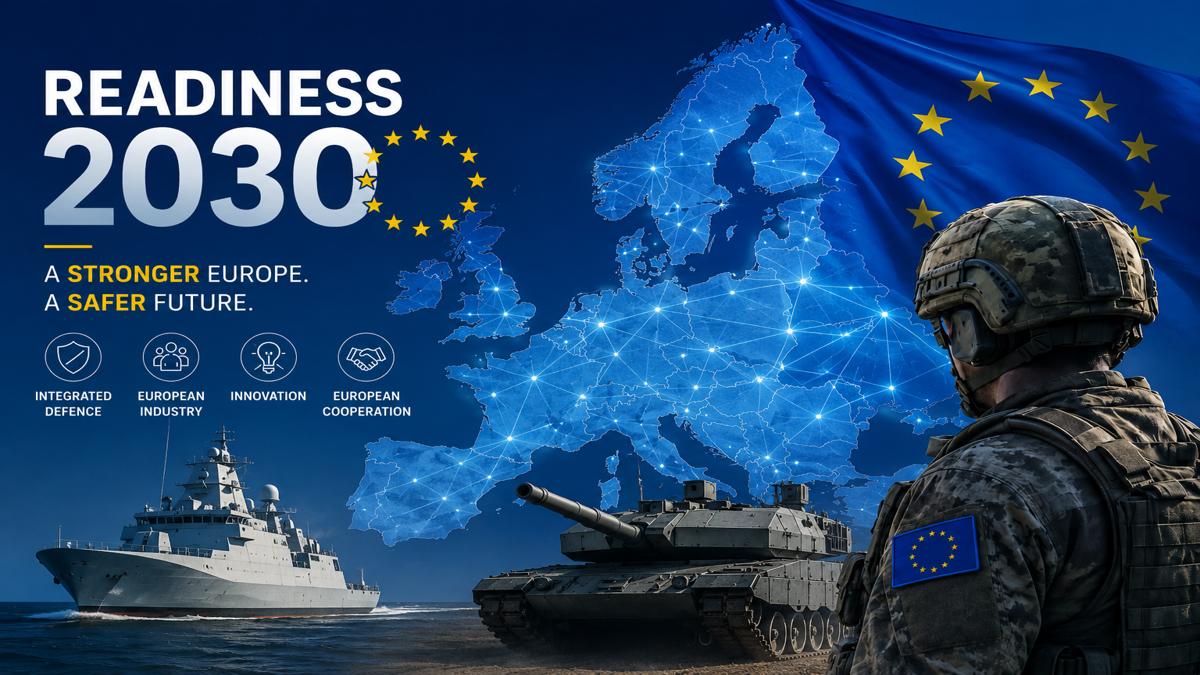
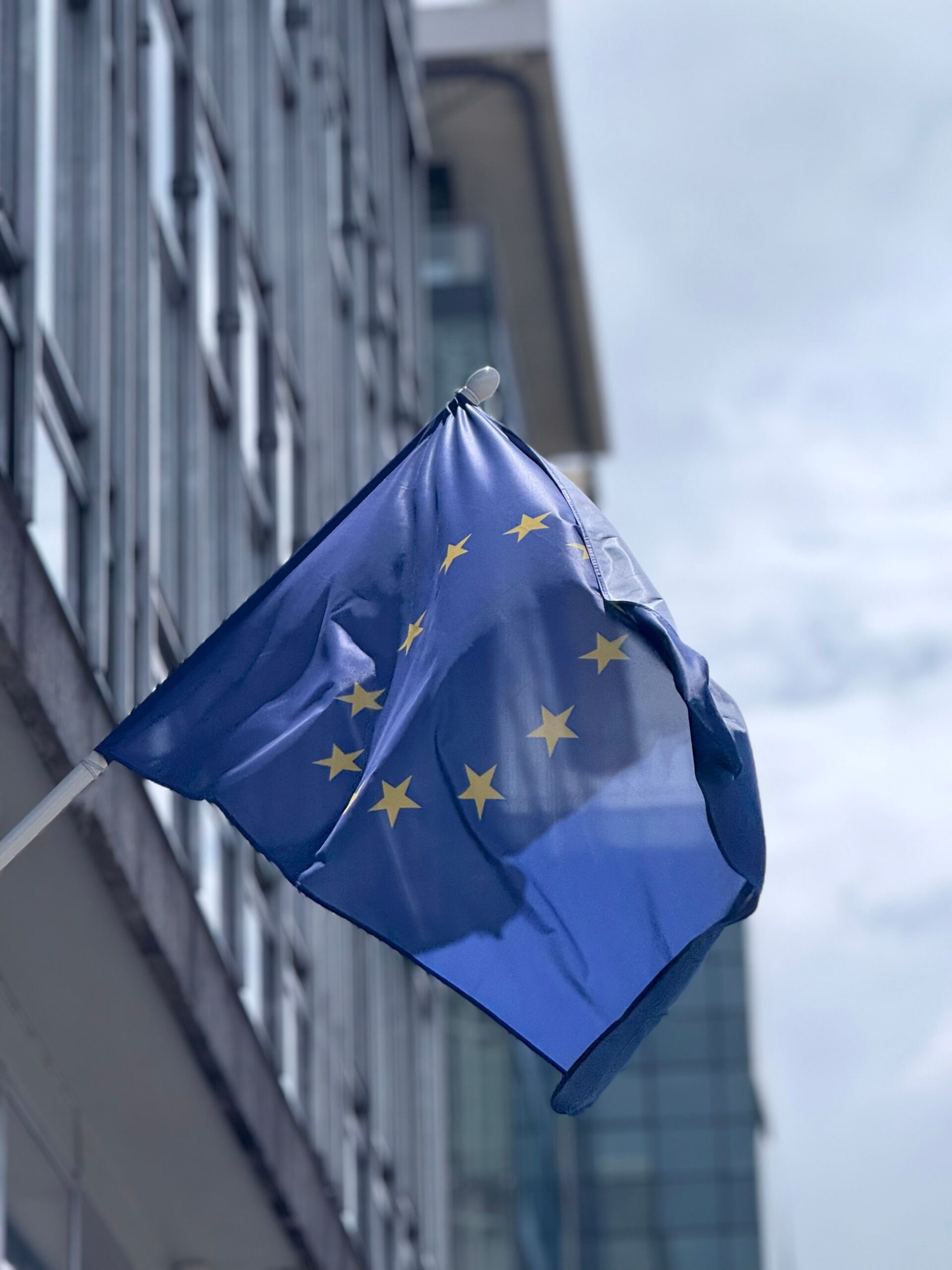
On March 4, 2025, Ursula von der Leyen announced the military initiative that will shape European nations throughout this decade and the next. The name originally chosen by the European Commission was striking in its bluntness: ReArm Europe.
Not “defense cooperation,” not “common security,” not “industrial resilience,” but the rearmament of Europe.
Only a few days later, in an apparent effort to soften the impact of such an explicit term, the program was rebranded under a more neutral title: Readiness 2030. Yet the substance remained unchanged: up to €800 billion mobilized to transform the European Union into a structure capable of sustaining a prolonged period of military, industrial, and strategic confrontation.
Official Commission documents describe a “massive defence investment surge,” referring to a dramatic increase in defense spending. The Council of the European Union reports that defense expenditures among member states reached €343 billion in 2024 and are projected to rise to €381 billion in 2025, representing an 11% increase in a single year and a 62.8% increase compared to 2020.
The European Defence Agency adds another crucial figure: in 2025, approximately €130 billion will be allocated to military investments, including procurement, weapons systems, research, development, and operational capabilities. This is no longer a matter of correcting years of underinvestment. It marks a fundamental shift in policy.
On June 25, 2025, at the NATO Summit in The Hague, allied nations formalized an even more ambitious objective: reaching 5% of GDP devoted to defense and security by 2035, with at least 3.5% allocated to core military expenditures and 1.5% dedicated to infrastructure, industry, cybersecurity, and strategic resilience.
This development fundamentally changes the debate. NATO is no longer asking simply for more tanks or more missiles. It is calling for entire national economies to be reorganized around security, military production, and the capacity to sustain a prolonged confrontation.
WHY READINESS 2030?
The direction is clear: Europe is preparing for a high-intensity war—or at the very least for a new era in which war becomes a permanent feature of political life.
History has seen this pattern before.
Before 1914, the great European powers rearmed in the name of deterrence, balance, and national security. Imperial Germany expanded its fleet to compete with Britain’s Royal Navy; France reorganized its military forces; Russia accelerated railway mobilization plans; Austria-Hungary attempted to compensate for its internal fragility through military rigidity.
No European capital openly declared a desire for a general war. Yet all were building the tools, doctrines, and alliances that made such a war increasingly likely.
A similar process unfolded during the 1930s, though in different and even more dramatic forms. Nazi Germany rebuilt its military machine in violation of the Treaty of Versailles. Fascist Italy pursued its imperial ambitions. Militarist Japan transformed East Asia into a theater of armed expansion. France and Great Britain, after years of hesitation, eventually entered a late-stage rearmament process.
Then, as now, the public language was that of “security.”
Then, as now, the outcome was war.
RECOGNIZING A SIMILAR PSYCHOLOGICAL PATTERN IN HISTORY
The issue is not whether history repeats itself mechanically. The issue is recognizing a recurring pattern.
When governments, industries, military alliances, public banks, investment funds, and strategic institutions simultaneously converge toward rearmament—and when the media are employed to reinforce that direction—society is gradually moved into a wartime mindset, even while citizens are told that everything is being done in order to preserve peace.
Perhaps the most revealing phrase is the one frequently used by European leaders themselves: preparing for war in order to preserve peace.
It is rooted in the ancient Latin principle si vis pacem, para bellum—if you want peace, prepare for war. Yet in its contemporary application it produces a very specific effect: it normalizes the militarization of the economy and transforms doubt into irresponsibility, calls for diplomacy into naïveté, and opposition to rearmament into suspected sympathy for the enemy.
Ursula von der Leyen, former German Minister of Defense and now President of the European Commission, has become the political face of this transformation.
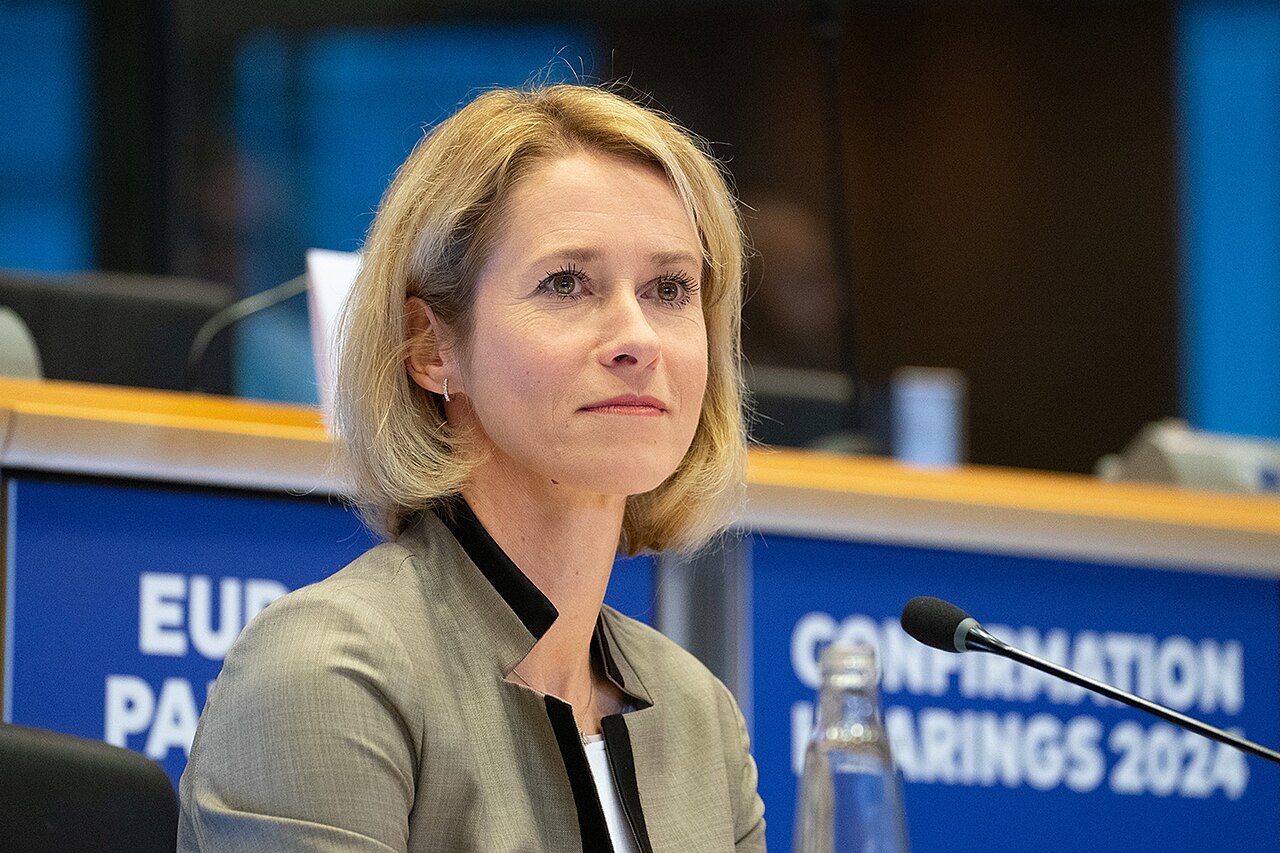
Kaja Kallas, the European Union’s High Representative for Foreign Affairs and Security Policy, embodies its harder edge, shaped by the Baltic experience and by a view of Russia as a permanent threat.
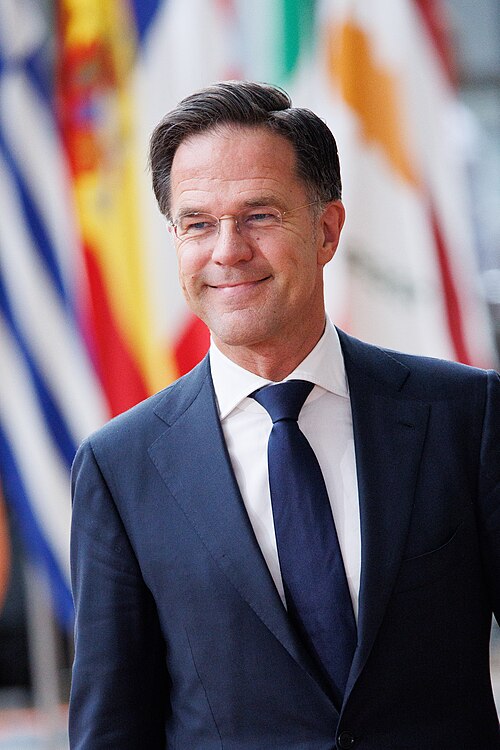
Mark Rutte, NATO Secretary General, translates the same approach into the language of the Atlantic Alliance.
Donald Trump, from Washington, adds a decisive layer of pressure: Europeans, he argues, must pay significantly more for their own defense. The result is a perfect convergence of interests.
Brussels seeks to build an autonomous European military capability. NATO is demanding unprecedented levels of defense spending. The United States insists that Europe shoulder a greater share of the financial burden. The defense industry sees the opening of an era of massive contracts. National governments, meanwhile, can justify new debt and increased expenditures through the supreme argument of security against the threat of Russian aggression.
In contrast, Europe’s citizens are not demanding war.
They are asking for higher wages, better healthcare, stronger social protections, affordable energy, effective immigration control, stability, opportunities for their children, relief from inflation, and peace. Yet many of these goals may become increasingly difficult to achieve to the extent that substantial financial resources are redirected toward military priorities.
Polling data paint a more complex picture than official narratives often suggest. A significant portion of the population supports European defense cooperation and continued assistance to Ukraine. However, that support does not necessarily translate into enthusiasm for a prolonged wartime economy.
On the contrary, according to our sources in Germany, many citizens who oppose war on moral or conscientious grounds are facing job losses as companies that once employed them are rapidly being converted into weapons manufacturing facilities or military supply operations, despite an already challenging economic environment.
WITHOUT THE CONSENT OF THE CITIZENS
The gap between populations and political elites is real and well documented, and it is precisely this gap that makes the entire process so unsettling.
ReArm Europe did not emerge from a major public consultation. It was not born from a Europe-wide referendum. It was not the result of an explicit mandate from European citizens.
Instead, it emerged from above, within an institutional framework in which the Commission, the Council, NATO, national governments, military establishments, and strategic industries advance through the accumulation of technical decisions that, taken together, produce a historic transformation.
No individual measure appears to constitute a declaration of war. Yet collectively they form the architecture of a society preparing itself for war.
The central issue is this:
When a continent decides to mobilize €800 billion, when it moves defense spending toward 5 percent of GDP, when it transforms the European Investment Bank, public funds, fiscal rules, and industrial policies into instruments serving defense objectives, it is not merely “improving readiness.” It is redefining its political identity.
Postwar Europe was built upon a promise: never again war on the European continent.
The Europe of 2025–2035 is being built upon a different promise: to be prepared for war in order not to become its victim.
This marks a profound transformation, yet it is increasingly presented as inevitable when it is anything but.
Here lies the core issue.
Every large-scale rearmament program creates interests of its own: once financial channels are opened, contracts are signed, production facilities are expanded, and engineers, technicians, analysts, ammunition manufacturers, electronics suppliers, cybersecurity firms, and drone producers are hired, rearmament ceases to be a temporary measure.
It becomes an ecosystem.
And every ecosystem tends to defend and perpetuate its own growth.
On the eve of the First World War, European governments spoke of balance.
On the eve of the Second World War, they spoke of national security.
Today they speak of deterrence, resilience, and readiness.
The vocabulary changes, but the underlying dynamic remains recognizable: political power prepares society for a threat, industry receives the resources to confront it, citizens are educated to accept sacrifices, and diplomacy is gradually subordinated to the logic of force.
As one example, beginning January 1, 2026, German men between the ages of 17 and 45 are formally required to obtain authorization from the military in order to remain abroad for more than three months. Although the measure was subsequently suspended following public controversy, the provision remains available for activation in the event of heightened tensions or a national emergency.
The conclusion is clear:
ReArm Europe is not merely a defense program: It is a signal that Europe’s governing classes consider the era of guaranteed peace to be over and the era of permanent preparation for conflict to have begun.
THE HISTORIC STATEMENTS OF THE EU PRESIDENT THAT OUTLINE THE FUTURE AND THE GLOBAL DESIGN
On March 18, 2025, during a speech at the Royal Danish Military Academy in Copenhagen, Ursula von der Leyen made a series of remarkably clear statements.
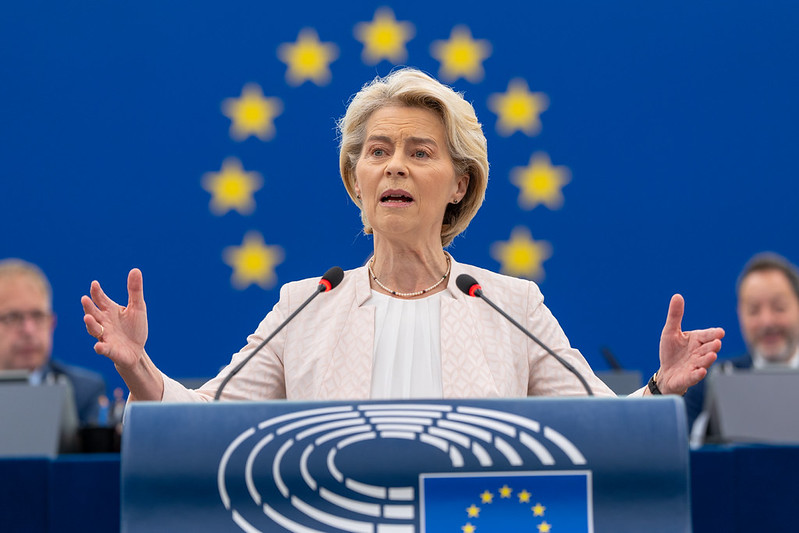
She declared that the era of peace in Europe is over and emphasized that the European Union must prepare itself for rearmament and war.
From a geopolitical and historical perspective, this appears to be pure fiction. Under different circumstances one might laugh at such claims and question the judgment of the leader making them. Yet the issue is too serious for dismissal.
More importantly, von der Leyen went further, making a statement of extraordinary significance—one that had already been foreshadowed on numerous occasions by both European and American leaders:
“The point is that we must see the world as it is, and we must act immediately to deal with it, because in the second half of this decade and beyond, a new international order will take shape.”
The manner in which this message was delivered is particularly noteworthy.
It was not presented as a possibility.
It was not proposed as a scenario.
It was simply stated as a future reality.
In other words, the outcome was presented as already decided.
What the guiding principles of this new order might be was not specified.
In any event, the central points of her speech can be summarized as follows:
1. The era of peace has ended, and Europe must prepare for war.
2. Sometime around 2030 and beyond, the creation of a New World Order has effectively been decided—although she does not specify by whom—in which the global landscape will evidently undergo profound change. War, in some way, appears linked to the emergence of this new international framework.
These statements were reiterated and expanded throughout the year, including during her address to the European Parliament in mid-December 2025 and in her State of the Union speech.
RESTORING A CORRECT VIEW OF REALITY
The reality, however, looks very different from almost any perspective.
There is no threat to the European Union.
Russia, despite being subjected to numerous sanctions that have served only to impoverish European citizens, has repeatedly indicated through proposals advanced by Vladimir Putin that it remains willing to engage in dialogue and continue supplying gas and other strategic resources.
To dramatically reduce geopolitical tensions, it would be sufficient to invite the Russian president to the negotiating table and conclude both non-aggression agreements and commercial agreements.
Taken together with what has become an increasingly troubling international media narrative—one that frequently presents information in a distorted manner while offering perspectives that appear disconnected from reality—the situation is highly unusual.
Historically, nations facing escalating international tensions have always attempted diplomatic solutions.
The strategy currently pursued by the European Union, by contrast, offers no meaningful attempt at dialogue with Russia, no diplomatic initiative, and no serious effort at negotiation.
Instead, weapons and military specialists continue to be sent to Ukraine, effectively making Europe a participant in the conflict against Russia, while EU member states are encouraged to redirect resources away from healthcare, education, public services, and other domestic priorities in order to fund ReArm Europe.
This suggests that Europe—or more precisely, the powerful economic interests operating behind the scenes that support von der Leyen, Kallas, and their allies—is rapidly laying the groundwork for an armed conflict described as “inevitable,” one whose ultimate purpose is the creation of a New World Order.
Such a conclusion might sound like a conspiracy theory were these not themes emerging directly from statements made by the President of the European Commission herself; ultimately, the path chosen by the European Union leads toward a direct NATO-Russia confrontation, a scenario many analysts expect by the end of this decade.
Readiness 2030, after all, literally implies being prepared by 2030.
Such a confrontation could only result in massive destruction and the exhaustion of economic and human resources on an unprecedented scale, that, more than anything else, would create the conditions under which nations might be compelled to unite within a new global framework and a new international order.
SOURCES
Introducing the White Paper for European Defence and the ReArm Europe Plan – Readiness 2030
Speech by President von der Leyen on European Defence at the Royal Danish Military Academy
